
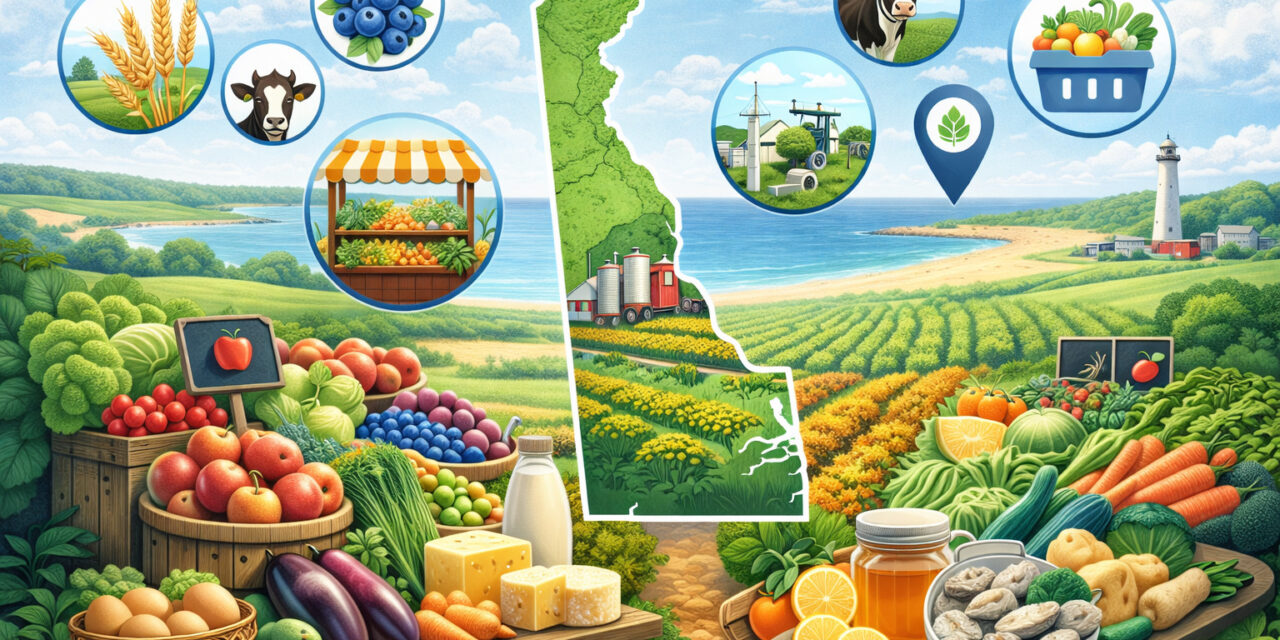
Sourcing local ingredients in Delaware is one of the fastest ways to make meals taste fresher, support nearby farms, and build a more resilient food routine for your household or business.
Because the state is compact, you can often visit a farmers market, a farm stand, and a specialty producer in a single afternoon—then turn those finds into a week of better breakfasts, lunches, and dinners with less waste.
What makes local ingredients in Delaware especially rewarding is variety. You can shop spring asparagus and strawberries, summer sweet corn and tomatoes, and fall apples and squash—then round it out with eggs, dairy, meats, and even shellfish grown in-state or harvested from nearby waters.
The best part is that “local” here isn’t a vague marketing term if you know where to look. Delaware has official buying guides, community-run markets, and producer networks that help you verify what’s actually local, seasonal, and responsibly produced.
This guide breaks down the best places and the smartest strategies to find local ingredients in Delaware, whether you’re a home cook who wants peak flavor, a caterer who needs consistent supply, or a restaurant that wants a true farm-to-table menu.
You’ll also learn how to shop by season, how to plan pickup routes, and what trends are likely to shape local sourcing in the next few years—so your approach stays current.
Start With Official “Buy Local” Directories and the Delaware Grown Network
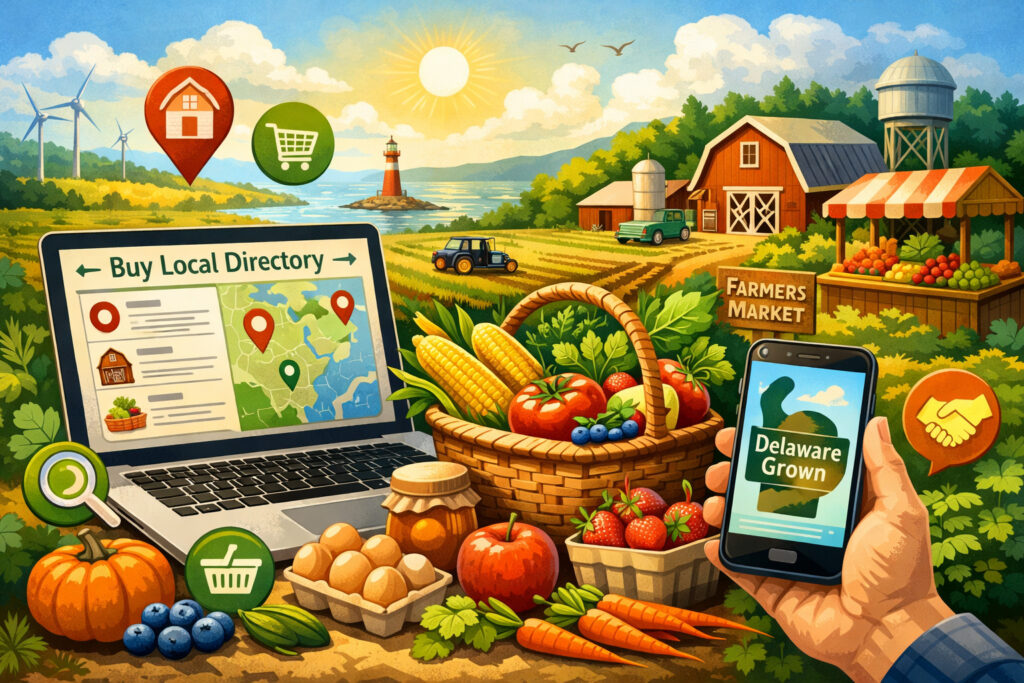
If you want the simplest way to locate reliable local ingredients in Delaware, begin with the state’s official directories. They’re designed to connect shoppers to growers, farm stands, and markets without guesswork, and they’re updated as vendors change locations or seasons.
A key hub is Delaware Grown, supported by the Delaware Department of Agriculture, which promotes locally produced foods and helps consumers find farm-to-table options. It’s most useful as a “launch point” for planning: pick your county, identify a cluster of farms or stands, and then map a loop that fits your schedule.
The Delaware Department of Agriculture also maintains a Buy Local Delaware Guide that frames how to buy direct and reminds shoppers that many operations are seasonal (so calling ahead matters).
That one detail alone saves a lot of frustration: the best local ingredients in Delaware follow daylight and weather, not supermarket expectations.
Finally, the state’s Farm Stands Guide encourages producers to add or update their listings—meaning you’re not stuck with stale information. When you see a farm stand listed there and on Delaware Grown, it’s a strong signal that the operation is active and engaged with local customers.
How to use these directories like a pro
To consistently source local ingredients in Delaware, use directories for planning—not just browsing. First, decide your “anchor stop” (a market day, a farm store, or a CSA pickup). Second, add 1–2 specialty stops nearby (eggs, dairy, seafood, meat).
Third, confirm hours and product availability the day before—especially early spring and late fall, when supplies can fluctuate.
When you click through listings, look for clues that matter for quality and consistency: harvest timing, storage guidance, and whether the farm sells direct, through markets, or both. Sellers who share these details tend to be organized—great for repeat purchasing of local ingredients in Delaware.
For businesses, directories are also a relationship tool. A short, professional inquiry (“What’s in season next month, what are your minimums, can you invoice?”) often unlocks consistent supply. Many farms prefer predictable weekly purchases, and that stability can lead to better pricing, priority availability, or custom harvests.
Farmers Markets: The Highest-Variety Way to Buy Local in One Stop
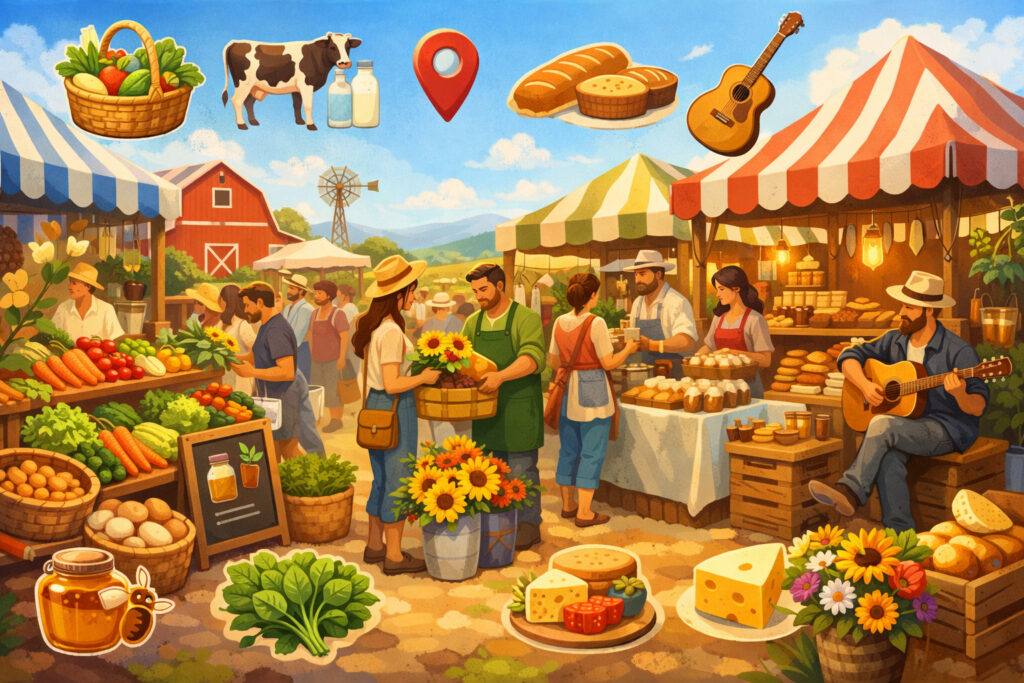
For most people, the quickest way to access a wide range of local ingredients in Delaware is the farmers market network. Delaware’s community-run markets bring together vendors from across the state so you can compare produce, baked goods, meats, plants, and specialty items in a single trip.
The Delaware Department of Agriculture highlights how these markets have grown and provides a dedicated guide to help residents locate them.
If you live in New Castle County, the county government also maintains farmers market details (including hours and vendor information), which is helpful when you want verified schedules and official updates.
Farmers markets are also excellent for learning. If you’re unsure how to cook something, ask the grower. Vendors selling local ingredients in Delaware often share preparation tips, ideal storage methods, and what will be best next week. That knowledge turns “shopping local” into a repeatable routine that gets easier over time.
What to prioritize when shopping a Delaware farmers market
To get the best local ingredients in Delaware at markets, shop with a plan that matches the season. In spring, prioritize early crops like asparagus and strawberries. In summer, focus on tomatoes, sweet corn, squash, peaches, and berries.
A University of Delaware seasonal overview notes these patterns and points out that buying direct is commonly done via farmers markets, on-farm markets, and roadside stands.
For the best flavor, buy “peak-ripeness” produce that may not travel well in conventional distribution. That’s where farmers markets shine. If you’re sourcing for a household, build meals around what’s abundant.
If you’re sourcing for a business, record what’s consistently available and what is limited-run—limited items can become weekly specials that make your menu feel alive while still controlling costs.
Also, watch for market programs and signs that indicate vendor verification or acceptance programs. For example, Delaware WIC resources publish participating farmers market locations for approved programs, which often correlate with organized market management and clear vendor standards.
When done right, farmers markets become a dependable pipeline for local ingredients in Delaware—not an occasional weekend outing.
On-Farm Markets, Farm Stands, and U-Pick: Freshest Timing, Strongest Value
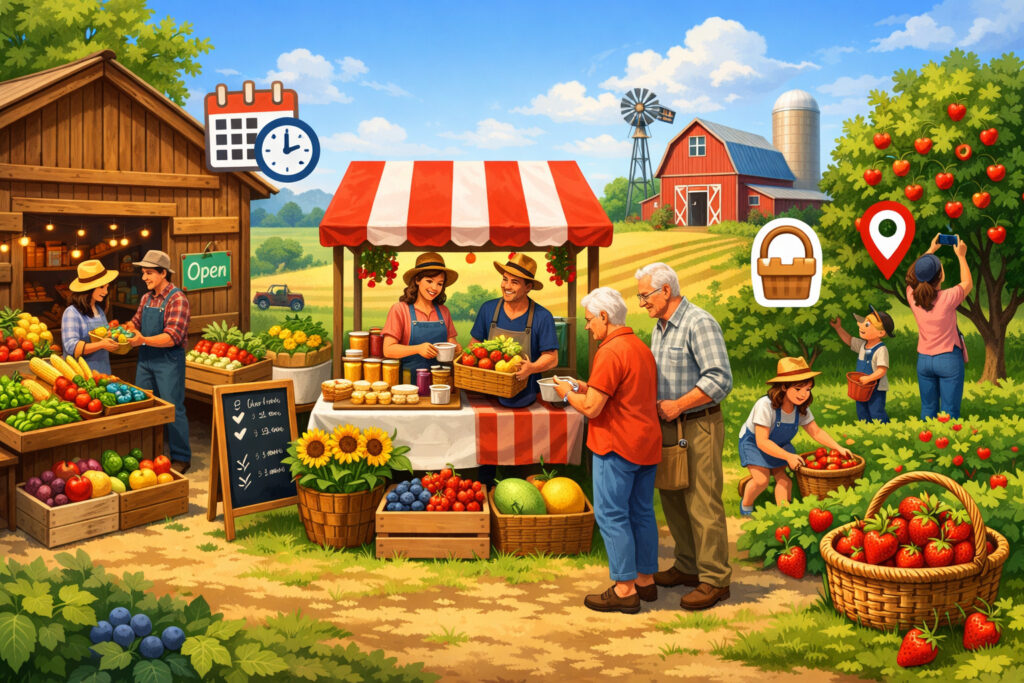
If you want local ingredients in Delaware with the shortest time between harvest and kitchen, farm stands and on-farm markets are hard to beat. These options often provide better value per pound (especially during peak season), and they’re ideal for bulk buying—think canning tomatoes, freezing berries, or stocking up on apples.
The Delaware Department of Agriculture actively promotes farm stands and encourages producers to add or update listings to help customers stay connected directly with farms. That matters because many stands operate on seasonal hours, changing quickly as crops come in.
U-pick operations also deserve special mention. They turn sourcing local ingredients in Delaware into an experience and a strategy: you pick at peak ripeness, you control selection, and you often pay less than retail. This is especially useful for berries, peaches, and apples—fruit categories where freshness changes flavor dramatically.
Spotlight approach: building a “farm stand route” for weekly sourcing
To make farm stands work as a weekly habit for local ingredients in Delaware, treat them like errands—route planning matters. Choose a single “farm corridor” per week (north, central, or south), then hit two stops: one produce-heavy stand and one protein/specialty stop (eggs, dairy, meat, honey). This keeps time predictable and reduces the risk of overbuying.
A practical strategy is to visit farm stands early in the day for best selection, then finish at a market or specialty store for any gaps. If you’re sourcing for a business, farm stands can become your “backup channel” when weather impacts market offerings.
Direct farm purchasing can also help you negotiate consistent weekly quantities—especially if you’re willing to take cosmetically imperfect produce (which is often perfect for sauces, soups, baking, and catering).
When you commit to a route, your local ingredients in Delaware sourcing becomes easier, faster, and more consistent—and you’ll naturally start cooking with the season rather than fighting it.
CSA Shares and Subscription Boxes: The Most Consistent Weekly Supply
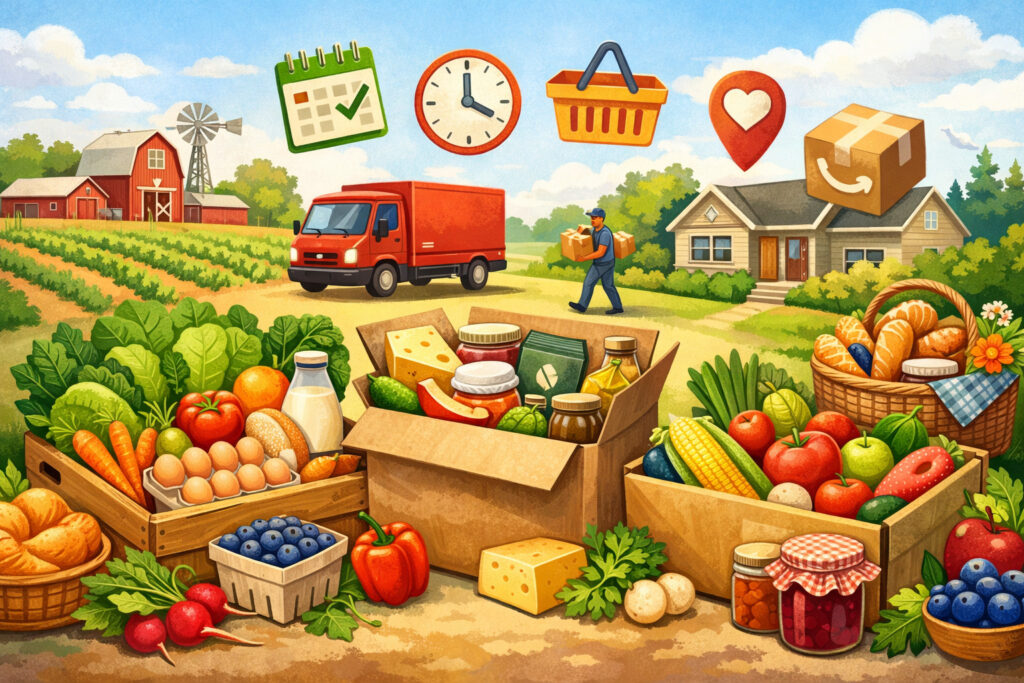
CSAs (Community Supported Agriculture programs) are one of the most dependable methods to get local ingredients in Delaware on a recurring schedule.
Instead of shopping for each item individually, you subscribe to a share of a farm’s harvest and pick it up weekly during the season. The Delaware Department of Agriculture maintains a CSA-focused resource to help residents find programs.
A major advantage is consistency. Even when you’re busy, a CSA pickup forces local eating into your routine. For households, it reduces decision fatigue. For small food businesses, CSA relationships can offer predictable volumes and a direct line to what’s coming next week.
A well-known CSA example is Fifer’s Farm Store & Kitchen (often listed with CSA details), which has operated seasonal subscriptions and includes add-on items such as eggs and specialty grocery products.
Coverdale Farm Preserve and other CSA-style options
Coverdale Farm Preserve is widely recognized for farm-based programming and seasonal activities, and it also appears in local discussions of CSA-style sourcing. If you’re looking for local ingredients in Delaware while also enjoying education, events, or a deeper connection to how food is grown, this model can be a strong fit.
When choosing a CSA, match the share size to your cooking habits. Many people overestimate how much produce they’ll use, then feel overwhelmed.
A smarter approach: start smaller, learn what you use consistently, then scale up. If you’re a business buyer, ask about “custom shares” or predictable case quantities—some farms can accommodate, especially when you become a repeat customer.
To get maximum value from local ingredients in Delaware via CSA, build a “core recipe set” that flexes with seasons: sheet-pan roasts, grain bowls, stir-fries, soups, frittatas, and quick pickles. You’ll waste less, enjoy more variety, and turn your CSA into an upgrade—not a challenge.
Seafood and Shellfish: Delaware Waters to Your Plate
Seafood is often overlooked when people talk about local ingredients in Delaware, but it can be one of the most distinctive categories—especially shellfish.
Delaware’s shellfish aquaculture has advanced significantly since the early 2010s, and now oysters are being harvested via aquaculture and sold to restaurants and distributors within the state.
This growth is important for local sourcing because aquaculture provides consistency. Wild harvests can fluctuate due to season, weather, and regulations. Farmed shellfish, when managed responsibly, can be more predictable in availability and size—helpful for both home entertaining and restaurant service.
For shoppers looking specifically for oysters, Delaware-based aquaculture businesses promote farm-raised products and local availability.
How to source Delaware oysters and keep quality high
To successfully incorporate seafood into your local ingredients in Delaware, focus on freshness, cold chain, and timing. Buy oysters as close to your serving day as possible.
Ask the seller about harvest date, storage guidance, and ideal consumption window. If you’re buying for a business, you’ll want a supplier that can provide regular delivery and consistent counts.
State resources note that Delaware oyster farmers may grow shellfish either on the seabed or using cage-like devices, and both methods produce edible oysters sold locally. That diversity means you can sometimes find different flavor profiles or shell characteristics depending on growing method and location.
When you build seafood into your rotation, you expand what “local” means. Local ingredients in Delaware are not only fields and orchards—they’re also bays and inlets. For many cooks, that’s where the most memorable meals come from.
Dairy, Eggs, and Ice Cream: Farm-Fresh Staples You Can Actually Visit
Dairy and eggs are foundational local ingredients in Delaware, and they’re often easier to source consistently than people expect—especially if you identify one reliable farm stop for weekly staples.
A standout example is Woodside Farm Creamery, a long-running farm operation that produces ice cream on-site using milk from Jersey cows and welcomes visitors to buy directly at the farm. This is a great illustration of “local” you can verify: you know where the animals are, where the product is made, and where you’re purchasing it.
Even if ice cream isn’t your main goal, creameries and farm stores often sell related items or connect you to other local suppliers. These sites can become a regular stop in your local ingredients in Delaware circuit, especially for families.
How to build a dependable “dairy + eggs” sourcing routine
The easiest way to stay stocked with local ingredients in Delaware like eggs and dairy is to choose one primary supplier and stick with them. Ask about restock days, any seasonal changes, and whether they have limits during holidays. If you shop at markets, ask vendors which farms they work with and whether they can reserve items.
For best quality, store eggs properly and buy dairy in quantities you can use within freshness windows. If you’re sourcing for a business, ask whether the producer can support invoicing and consistent weekly supply. Also, keep a backup supplier—weather and seasonality can impact production, and a second option prevents last-minute scramble.
Dairy and eggs also pair perfectly with seasonal produce. When you combine creamery dairy, farm eggs, and peak vegetables, local ingredients in Delaware stop being “ingredients” and start becoming complete meal systems: omelets, quiches, creamy soups, baked goods, and easy breakfasts that actually feel special.
Local Meat and Poultry: Smarter Buying for Quality and Transparency
Meat is one of the most valuable categories for local ingredients in Delaware because it’s where transparency matters most: feed practices, animal welfare, processing, and freshness all affect quality. Local sourcing can give you better information—and often better flavor—than anonymous supply chains.
Delaware has farms and producers offering pasture-based or grass-fed options, and listings for farms such as Grass Works Meat Farm highlight grass-fed and pastured approaches and direct contact information for purchasing.
For households, the “sweet spot” is often a mix: buy ground meat and everyday cuts regularly, then purchase larger quantities (like a freezer share) once or twice per year if you have storage space.
For restaurants and caterers, the biggest unlock is consistency: you need a producer who can supply a reliable portion size and steady weekly availability.
How to buy local meat without overspending
To keep local ingredients in Delaware affordable in the meat category, start by choosing “high-impact” swaps. Replace a few weekly purchases with local ground beef, sausage, or chicken—items where quality differences are immediately noticeable. Then expand into roasts, steaks, or specialty cuts once you trust the supplier.
Ask smart questions: What’s the approximate lead time? Are there minimums? Do they sell mixed boxes? Are there seasonal constraints? For many buyers, a mixed bundle is the best introduction because it reduces decision-making while you learn what your household uses.
Finally, think like a menu planner. Local meat shines when paired with seasonal vegetables and simple techniques. When you build meals around local ingredients in Delaware across categories—produce, eggs, dairy, meat—you end up buying less, wasting less, and enjoying more.
Buying for Restaurants and High-Volume Kitchens: Wholesale Paths That Still Stay Local
If you’re sourcing local ingredients in Delaware for a restaurant, café, school, or catering operation, your challenge isn’t just “where to buy”—it’s reliability, invoicing, and volume. Farmers markets are great for specials, but consistent supply usually comes from relationships with growers, food hubs, or wholesalers who work directly with farms.
Some Delaware-area growers and distributors specifically describe wholesale offerings, including packed and shipped produce for wholesale customers. For example, Muzzarelli Farms publicly outlines wholesale distribution of produce such as sweet potatoes and seasonal items for Delaware and surrounding areas.
The best approach is often hybrid: buy signature seasonal items directly from farms, then use a distributor for the “always-needed” volume (onions, potatoes, greens) while still prioritizing Delaware-grown when available.
A practical “local-first” purchasing system for businesses
To keep local ingredients in Delaware at the center of a business purchasing system, start by defining three tiers:
- Signature Local: items you highlight on the menu (tomatoes in summer, apples in fall, oysters when available).
- Core Local: items you buy regularly when in season (greens, squash, eggs).
- Flexible Fill: items you buy as needed (backup produce when weather reduces yields).
Then, build supplier relationships around those tiers. Farmers love predictable demand. If you commit to a weekly case quantity during a season, you’ll often get better service. Also, plan a “seasonal menu rhythm” so you’re not trying to serve summer items in late fall. That’s where local sourcing succeeds.
Done well, this system makes local ingredients in Delaware financially workable, operationally stable, and genuinely marketable—because your “local” claims are backed by real supplier relationships, not vague branding.
Seasonality, Storage, and Menu Planning: The Skill That Makes Local Sourcing Easy
The secret to consistently enjoying local ingredients in Delaware is not a single market or a single farm—it’s seasonality literacy. When you know what should be abundant right now, you shop faster, spend smarter, and cook with less effort.
Delaware seasonal patterns include early spring items like asparagus and strawberries, and summer peaks for tomatoes, blueberries, peaches, squash, watermelon, and sweet corn. Planning around those windows makes everything simpler.
Storage is just as important as sourcing. If you buy local and treat it like supermarket produce, you’ll waste more. Many local items are fresher and more delicate, which is great for flavor but requires better handling.
A simple seasonal roadmap for local ingredients in Delaware
Use this framework to keep local ingredients in Delaware practical:
- Spring: quick-cook vegetables, berries, early greens. Prioritize freshness and fast use.
- Summer: high volume, high variety. Plan preservation: freezing berries, making sauce, grilling and roasting.
- Fall: storage crops and orchard fruit. Think soups, roasts, baking, and pantry-friendly meals.
- Winter: fewer fresh crops, more value-added items (stored roots, preserved foods, meats, dairy, eggs).
If you’re a business, align seasonal offerings with predictable prep methods. If you’re a household, choose 2–3 “go-to” recipes per season to reduce stress.
When you master seasonality, you stop chasing ingredients—and local ingredients in Delaware start showing up naturally in your meals.
Future Outlook: What’s Next for Local Sourcing Across Delaware
The future of local ingredients in Delaware is shaped by a few big forces: rising consumer demand for transparency, expanding farmer-to-consumer logistics, and the continued growth of aquaculture and specialty production. State environmental reporting notes that Delaware’s shellfish aquaculture industry has made significant progress, with oysters harvested and sold locally—suggesting continued momentum in seafood sourcing.
On the market side, Delaware’s farmers markets have been highlighted as thriving community-run outlets in official state communications, which supports the expectation that market-based sourcing will remain a central channel for local buying.
What does this likely mean over the next several years? More “local-first” consumer expectations, more direct ordering options, and stronger seasonal menu culture—especially as farms and markets improve digital communication (updates, preorders, pickup windows).
Predictions you can plan around
Here are practical predictions for local ingredients in Delaware that you can use right now:
- More preorder and pickup systems: farms and markets will keep improving online order tools to reduce waste and stabilize demand.
- Growth in local shellfish visibility: expect more restaurants and retailers to highlight Delaware oysters as local pride.
- More “value-added local”: sauces, jams, pickles, prepared foods, and farm-made goods will expand because they help producers sell outside peak harvest windows.
- Tighter seasonality messaging: consumers are learning that local food is seasonal; businesses that embrace it will stand out.
If you build flexible habits now—one market, one farm stand, one specialty supplier—your local ingredients in Delaware strategy will stay strong as options expand.
FAQs
Q.1: How do I verify something is truly local in Delaware (and not just “marketed” as local)?
Answer: The fastest verification method for local ingredients in Delaware is to ask direct questions and cross-check with reliable directories. Ask the vendor: “Where is this grown or raised?” “Is it your farm?” “Do you grow it or resell it?” A real producer can usually answer immediately and will often share details about harvest timing and handling.
For extra confidence, use official resources like the Delaware Department of Agriculture’s Buy Local guides and Delaware Grown listings, which are designed to connect shoppers with Delaware producers and farm stands. If a vendor or farm appears consistently in these state-supported resources, that’s a strong signal you’re dealing with a legitimate local operation.
Also, watch for seasonal realism. If you’re being offered “local” strawberries far outside the normal Delaware window, ask more questions. Seasonality is one of the easiest truth-tests when buying local ingredients in Delaware.
Q.2: What are the best options if I need consistent weekly supply (not occasional shopping)?
Answer: For consistent weekly local ingredients in Delaware, CSAs and direct farm relationships tend to outperform “drop-in” shopping. A CSA share gives you a scheduled pickup and a predictable flow of seasonal produce.
The Delaware Department of Agriculture provides CSA program resources, and well-known CSA listings like Fifer’s show how subscriptions can be structured seasonally with add-on items.
If you need consistency for a business, consider a hybrid system: a CSA-style produce relationship (or direct farm purchasing) plus a dependable wholesale partner for core items. This reduces menu disruption when weather affects supply.
The key is planning: decide your weekly pickup day, set a rough weekly volume goal, and build recipes that adapt to what’s abundant. This approach turns local ingredients in Delaware into a stable supply chain instead of a weekend hobby.
Q.3: Can I source local seafood year-round, and what should I ask suppliers?
Answer: You can often find seafood options for local ingredients in Delaware, but year-round availability depends on species, harvest windows, and aquaculture capacity.
Delaware’s shellfish aquaculture has grown significantly since the early 2010s, and oysters are now being harvested and sold within the state—supporting a more consistent local shellfish supply.
When buying oysters (or any shellfish), ask: harvest date, storage temperature guidance, expected shelf life, and whether the product is farmed in-state. If you’re purchasing for a restaurant, ask about delivery schedules, minimums, and consistency of sizing.
If you prioritize cold chain and timing, seafood can become a reliable pillar of local ingredients in Delaware—and one of the most unique “local” categories you offer at home or on a menu.
Conclusion
The best way to find local ingredients in Delaware is to stop thinking on one-off trips and start thinking in systems. Use state-supported directories like Delaware Grown and official Buy Local guides to identify reliable producers and farm stands.
Build weekly variety through farmers markets, then lock in consistency through CSAs and direct farm relationships. Add specialty strength with local oysters, farm dairy, and pasture-based meats, and your “local” routine becomes both delicious and dependable.
Most importantly, let seasonality do the work. When you shop for what’s abundant, local ingredients in Delaware become easier to find, easier to cook, and easier to afford.
Over time, you’ll spend less energy searching and more energy enjoying—because the state’s farms, waters, and markets will start to feel like a connected pantry you know how to use.