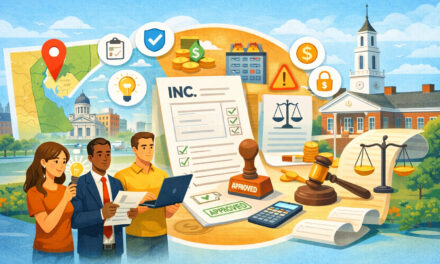

Starting a company is exciting, but the legal steps can feel overwhelming. This detailed guide explains how to register your business in Delaware from start to finish, using plain language and up-to-date information.
You’ll learn how to choose the right structure, file with the Delaware Division of Corporations, get your business license, register for taxes, and stay compliant in the years ahead.
Whether you’re a solo founder, a small local business, or a startup planning to raise investment, this step-by-step guide to registering a business in Delaware will walk you through every stage and help you avoid costly mistakes.
Why Register Your Business in Delaware?

Before you learn exactly how to register your business in Delaware, it helps to understand why this state is such a popular place to form a company. Delaware is widely known as a corporate hub.
Many startups, tech companies, and even global enterprises choose Delaware for its flexible, business-friendly laws and efficient government systems.
One of the biggest advantages is Delaware’s well-developed legal framework for business entities. The state has a specialized court system, the Court of Chancery, that focuses on business and corporate disputes.
This means there is a long history of case law that makes corporate outcomes more predictable, which investors, lawyers, and founders really like.
Delaware also offers a wide range of entity types, including LLCs, corporations, limited partnerships, and more. The statutes are flexible, especially for LLCs and corporations, making it easier to customize ownership, voting rights, profit sharing, and governance.
This is a major reason venture capital–backed startups often choose a Delaware corporation when they plan to raise money.
From an operational perspective, Delaware has streamlined many processes. The Delaware One Stop portal allows you to register and license your business, obtain certain tax accounts, and manage your business licenses online in one place. This makes it much easier to complete the many steps involved in registering your business.
Looking ahead, Delaware continues to invest in digital services, faster processing, and transparent online tools. It’s reasonable to expect more automation, clearer guidance, and potentially greater integration with federal systems over the next few years.
As compliance rules evolve, especially around anti-money-laundering and transparency, Delaware is likely to remain a leading jurisdiction, updating its processes to keep registration fast but secure.
Step 1: Decide on Your Delaware Business Structure

Your first practical step in how to register your business in Delaware is choosing a legal structure. This decision affects your taxes, liability, paperwork, and even how investors see your company.
Common Delaware business structures include:
- Sole proprietorship – An informal structure for a single owner. There’s no separate legal entity, so the owner is personally liable for debts. In Delaware, a sole proprietor may need to register a trade name with the Prothonotary’s Office in each county where they operate and obtain a state business license.
- Partnership (general or limited) – Two or more people operate a business together. General partners have personal liability, while limited partners may have limited liability depending on structure.
- Limited Liability Company (LLC) – One of the most popular Delaware entities. An LLC offers liability protection, flexible management, and pass-through taxation by default. Delaware LLC law is highly flexible, allowing detailed operating agreements.
- Corporation (C-corp or S-corp for tax) – A separate legal entity owned by shareholders. Corporations are often used for startups that plan to raise investment. Delaware corporate law is well-developed and widely trusted.
- Limited partnership (LP) and limited liability partnership (LLP) – Hybrid structures used in certain industries, often when there are passive investors.
When deciding, consider:
- How many owners you have now and expect in the future.
- Whether you expect to raise money from outside investors.
- Your risk level and need for personal liability protection.
- Desired tax treatment (pass-through vs. corporate level).
- Long-term plans (e.g., selling the company, going public).
Talk with a business attorney or tax advisor before forming your entity if possible, especially if you may seek investment or have multiple partners. Once formed, changing your entity type can be complex and sometimes expensive.
In the future, you can expect more tools, calculators, and AI-driven questionnaires from both private platforms and government portals to help match founders with the best structure. Still, the fundamental choice—LLC vs corporation vs other forms—will remain a critical first step in registering a business in Delaware.
Step 2: Choose and Protect Your Delaware Business Name

Your business name is more than branding—it’s a legal identifier. When learning how to register your business in Delaware, you need to understand both the creative and regulatory sides of name selection.
First, brainstorm names that reflect your products, services, and values. Aim for something easy to spell, memorable, and flexible enough to work even if your offerings evolve. At the same time, make sure your name isn’t misleading.
For example, if you’re not a bank or insurance company, you generally shouldn’t use words that imply regulated activities unless you actually qualify and obtain the necessary approvals.
Next, check if your desired name is available:
- Use the Delaware Division of Corporations entity search and name availability tools to see if your exact or similar name is already taken.
- Search national and regional trademarks to reduce the risk of infringing someone else’s brand.
- Check domain names and social handles to ensure a consistent online identity.
Your entity type may also impose naming rules. For example, a Delaware LLC usually must include “Limited Liability Company,” “LLC,” or a similar abbreviation, while a corporation often needs “Corporation,” “Incorporated,” or “Company” in its legal name.
If your name is available, you typically secure it by filing your formation documents with the Delaware Division of Corporations. Delaware also allows name reservation in some cases, which can hold a name for a limited period while you prepare to file.
Finally, think about brand protection. After registering your business name in Delaware, consider applying for a trademark at the federal level if you expect to operate beyond state borders or build a national brand.
Over the next few years, tools that monitor trademark databases and domain registrations will continue to improve, making it easier to spot conflicts early and protect your identity.
Delaware Entity Name Rules and Availability Search
A key detail in how to register your business in Delaware is understanding the specific rules around entity names. Delaware doesn’t just accept any name—there are criteria to ensure clarity, prevent confusion, and maintain public trust.
Here are some core principles:
- Uniqueness – Your name must be distinguishable from other entities already on file with the Delaware Division of Corporations. Even small differences (like adding “LLC”) may not be enough if the root name is identical.
- Required identifiers – LLCs, corporations, and other entities must use appropriate suffixes (e.g., “LLC,” “Inc.,” “Corp.,” “LP”) to indicate their structure.
- Restricted words – Certain words related to banking, insurance, professional services, or public institutions might require additional approvals or licensing before use.
- Non-misleading – Names should not suggest that the business is a governmental entity or engaged in activities it is not authorized to perform.
To check availability, you can:
- Use the entity search on the Delaware Division of Corporations website to review existing entities and see potential conflicts.
- Use any name-availability tools provided directly by the state to quickly test candidate names.
- If you are serious about a specific name, work with your registered agent or attorney to confirm availability and, if desired, reserve it.
In the future, expect smarter search tools that not only show exact matches but also flag phonetically similar names, possible trademark clashes, and domain availability. These improvements will make it easier to pick a strong, compliant name at the start instead of dealing with changes later.
Using Trade Names (DBAs) and Brand Names in Delaware
Even after you register your official legal name, you might want to operate under a different brand name. This is where doing-business-as (DBA) or trade names become important in Delaware.
For example, your legal entity could be “Coastal Tech Holdings LLC,” but you might serve customers as “Coastal Wi-Fi Solutions.” The legal name appears in state filings and contracts, while the trade name appears in marketing and signage.
In Delaware:
- Sole proprietors typically register their trade name with the Prothonotary’s Office in each county where they do business. This ensures there is a public record connecting the individual to the business name.
- Legal entities (like LLCs and corporations) register the entity itself with the Division of Corporations and then may use trade names for branding. Some DBA or trade-name requirements can be addressed through local or state-level registration processes and must be coordinated with your business license.
You should also be aware of upcoming changes. Guidance on Delaware business licenses highlights 2025 DBA law changes, indicating that rules around assumed names and registrations are evolving.
These changes may clarify how and where trade names are registered, how the public can search for them, and what disclosure is required on signage and contracts.
To stay safe, follow these best practices:
- Use your full legal name on contracts, bank accounts, and official filings.
- Clearly link the trade name to the legal entity in public materials when possible (e.g., “Coastal Wi-Fi Solutions, a division of Coastal Tech Holdings LLC”).
- Monitor state and local updates on trade-name and DBA rules, especially through official channels and reputable legal resources.
Step 3: Appoint a Delaware Registered Agent
When you register a business in Delaware, you must appoint a registered agent with a physical street address in the state. This is a critical step in how to register your business in Delaware because the state needs a reliable contact point for official and legal documents.
A registered agent’s responsibilities typically include:
- Receiving service of process (lawsuits and legal notices).
- Handling official correspondence from the Delaware Division of Corporations.
- Forwarding tax notices, annual report reminders, and other state communications.
The agent can be:
- An individual resident in Delaware.
- A business entity authorized to act as a registered agent in Delaware (many companies specialize in this service).
Most out-of-state owners choose a commercial registered agent because they don’t have their own office in Delaware. Many registered agents provide online dashboards, compliance calendars, and document storage to help you stay organized.
When selecting an agent, consider:
- Reliability and responsiveness.
- Additional services (compliance alerts, mail forwarding, virtual office options).
- Transparent pricing and renewal terms.
In the future, registered agent services are likely to become even more integrated with state systems and private platforms. You may see tighter connections between your agent’s dashboard, the Delaware One Stop portal, and tax filings, allowing near real-time updates and fewer missed deadlines.
Step 4: File Formation Documents with the Delaware Division of Corporations
Once you have chosen your structure, name, and registered agent, you are ready to file your formation documents with the Delaware Division of Corporations. This is the core legal step in how to register your business in Delaware and create an entity separate from you personally.
The exact document you file depends on the entity type:
- LLC – Certificate of Formation
- Corporation – Certificate of Incorporation
- Limited partnership – Certificate of Limited Partnership
- Limited liability partnership – Certificate of Registration for LLP
The Division of Corporations provides standard forms and detailed instructions on its website, organized by entity type and document type. You can file by mail, through a registered agent, or via electronic methods depending on the document and your chosen service.
Typical information required includes:
- Entity name and suffix.
- Registered agent’s name and street address in Delaware.
- For corporations: authorized shares, par value, and sometimes initial directors.
- For LLCs: sometimes a simple statement that an LLC is formed pursuant to Delaware law.
Delaware also offers expedited filing services, allowing same-day or 24-hour processing for an additional fee. This can be crucial for time-sensitive deals or funding deadlines.
After your filing is accepted, you will receive a file-stamped copy and possibly a certificate of good standing if requested. From this point, your entity exists under Delaware law—even if you still need to complete other licensing and tax steps.
Over time, expect even more robust online filing tools and faster electronic confirmations as Delaware modernizes its corporate systems.
Forming a Delaware LLC
A Delaware LLC is one of the most popular structures because it combines flexibility, liability protection, and relatively simple governance.
If your main goal when you register your business in Delaware is to protect your personal assets while keeping operations straightforward, an LLC is worth serious consideration.
To form a Delaware LLC, you generally:
- Choose a compliant name with “LLC” or a similar designator and confirm availability.
- Select a registered agent with a Delaware street address.
- Prepare and file the Certificate of Formation with the Division of Corporations. The form typically includes only basic information: the LLC name and the registered agent’s name and address.
- Pay the state filing fee and any expedited processing fees if needed.
- Draft an Operating Agreement (kept internally) that sets out ownership, management, voting, profit distribution, and procedures for adding or removing members.
The Operating Agreement is not filed with the state, but it is the key internal document controlling how your LLC functions. Delaware LLC law allows very flexible arrangements, including different classes of membership interests, special voting rights, and custom profit-sharing models.
From a compliance standpoint, Delaware LLCs pay an annual tax (rather than a traditional franchise tax based on shares) and must keep up with state deadlines. Looking ahead, expect more digital tools that help LLC owners track member interests, automate distributions, and even integrate operating agreement terms into smart contracts or cap-table software.
Forming a Delaware Corporation
If you plan to raise investment, issue stock options, or eventually go public, forming a Delaware corporation is often the preferred path. This is a core scenario where people ask how to register your business in Delaware because investors and attorneys are extremely familiar with Delaware corporate law.
To form a Delaware corporation, you generally:
- Choose a corporate name that includes “Corporation,” “Incorporated,” “Company,” or a similar term, and confirm it is available.
- Choose a registered agent in Delaware.
- Prepare a Certificate of Incorporation, which typically includes:
- Corporate name.
- Registered agent information.
- Authorized shares and par value.
- Purpose clause (often a broad “any lawful act” statement).
- Sometimes the name and address of the incorporator or initial directors.
- Corporate name.
- File with the Delaware Division of Corporations and pay the filing fee.
- Hold an organizational meeting (or execute written consents) to adopt bylaws, appoint officers, approve stock issuances, and handle other initial steps.
Delaware corporations also face ongoing obligations:
- Paying franchise tax annually.
- Filing an annual report with the state.
- Issuing stock, maintaining a stock ledger, and keeping corporate minutes.
Because Delaware corporate law is so well-developed, you benefit from greater predictability in disputes over fiduciary duties, mergers, and shareholder rights. Over the next decade, expect continued refinements to corporate statutes, especially around digital shares, virtual meetings, and emerging governance models.
Other Common Delaware Entity Types (LP, LLP, Nonprofit, etc.)
While LLCs and corporations are the most common, how to register your business in Delaware can also involve other entity types tailored to specific needs.
- Limited Partnerships (LPs) – Typically used when there are one or more general partners who manage the business and limited partners who invest capital but have limited liability. Delaware LPs are formed by filing a Certificate of Limited Partnership.
- Limited Liability Partnerships (LLPs) – Often used by professional firms like law or accounting practices. An LLP can protect partners from certain liabilities arising from other partners’ actions. Registration involves a specific LLP filing and meeting professional licensing requirements.
- Nonprofit corporations – Formed for charitable, educational, or similar purposes. They are created by filing a nonprofit-appropriate Certificate of Incorporation and then seeking tax-exempt status at the federal level and with state tax authorities where applicable.
These entities follow similar steps: choose a structure, select a name, designate a registered agent, and file the appropriate formation document with the Delaware Division of Corporations.
In the future, you may see more hybrid structures and statutory refinements to support social enterprises, impact investing, and cooperative models. Delaware has already explored flexible tools like public benefit corporations, and it is likely to continue innovating in response to new business trends.
Step 5: Obtain a Federal Employer Identification Number (EIN)
After your entity is formed with Delaware, the next step in how to register your business in Delaware is usually obtaining an Employer Identification Number (EIN) from the Internal Revenue Service (IRS).
An EIN is a unique nine-digit number that identifies your business for federal tax purposes. You typically need an EIN if:
- Your business has employees.
- Your entity is an LLC, corporation, or partnership.
- You file certain federal tax returns.
- You want to open a business bank account or apply for financing.
The EIN application is usually done online through the IRS website. It’s free, and in many cases you can receive your EIN immediately after filing the application. Banks, payroll providers, and many state systems will ask for your EIN, so it’s best to get it soon after your Delaware entity is approved.
Even if you are a single-member LLC or sole proprietor, obtaining an EIN can help you separate personal and business finances, which supports liability protection and makes accounting easier.
In the future, there may be more integration between state formation systems and federal EIN issuance, allowing one workflow to create your entity, obtain an EIN, and connect to tax accounts. For now, it remains a separate but essential step in registering your business.
Step 6: Register and License Your Business Through Delaware One Stop
Forming an entity is not the end of how to register your business in Delaware. You also need to register with the Delaware Division of Revenue and obtain a Delaware business license. The easiest way to do this is through the Delaware One Stop online portal.
Delaware generally requires all businesses operating in the state—including those formed elsewhere but doing business in Delaware—to obtain a state business license from the Division of Revenue.
Through Delaware One Stop, you can:
- Register and license your business to operate in Delaware.
- Obtain your general business license and sometimes specific industry-related licenses.
- Create and manage your account to renew, modify, or close licenses in the future.
To use One Stop effectively:
- Create a One Stop account so you can save progress and manage licenses over time.
- Follow the guided questions about your business activities, structure, employees, and location.
- Apply for the required licenses and registrations, paying attention to activity codes and tax classifications.
- Pay the applicable fees online and save your confirmations.
Looking forward, One Stop is likely to add additional features, such as better status tracking, more real-time help, and deeper integration with tax and labor systems, further simplifying the process of registering and licensing your business in Delaware.
Getting Your Delaware Business License
The Delaware business license is a core requirement when you register your business. Without it, you risk penalties and the inability to legally operate or bid on certain contracts.
Key points:
- Most businesses must obtain a general business license from the Division of Revenue before starting operations.
- Some trades and industries require additional licenses or permits, such as professional licenses, health permits, or specialized regulatory approvals.
- You can usually apply, pay, and receive your license confirmation through Delaware One Stop.
The process typically involves:
- Providing your legal entity information (name, EIN, address, responsible party).
- Describing your business activities and selecting the appropriate industry and tax classification codes.
- Indicating whether you will have employees, sell taxable goods or services, or operate in specific sectors.
- Paying the initial license fee, often prorated depending on when you start during the fiscal year.
Renewals are usually required annually. Delaware One Stop offers tools to renew business licenses online and to modify or close licenses if your activities change.
Over the next few years, expect even smoother renewals, automatic reminders, and possibly dynamic fees or credits tied to compliance history or digital filing habits.
Registering for State-Level Taxes
When you register your business in Delaware, you must also consider state-level tax registrations. The exact requirements depend on your activities, location, and whether you have employees.
Through Delaware One Stop and the Division of Revenue, you may need to:
- Register for gross receipts tax if your type of business is subject to this tax.
- Register for withholding tax if you have employees and must withhold state income tax from wages.
- Register for other specific taxes depending on your industry (e.g., lodging, alcohol, or certain excise taxes).
Delaware’s Division of Revenue provides charts and guidance describing the registration requirements by entity type and situation. These resources explain when you must register with the Division of Revenue, the Department of Labor, and other agencies.
Failing to register for the correct taxes can lead to penalties and interest. In the future, expect the One Stop portal and third-party accounting tools to offer more proactive alerts, automatically cross-checking your business profile against tax rules and suggesting registrations you might have missed.
Step 7: Register for Employer Accounts and Labor Compliance
If your Delaware business will hire employees, an important part of how to register your business in Delaware is staying compliant with labor-related registrations.
You may need to:
- Register with the Delaware Department of Labor’s Division of Unemployment Insurance – Employers must register and pay unemployment insurance contributions.
- Register with the Division of Workers’ Compensation – If you meet certain thresholds, you must carry workers’ compensation insurance to protect employees who suffer work-related injuries or illnesses.
- Register as a withholding agent – If you have employees, you must withhold state income tax from wages and remit it to the Division of Revenue. Delaware One Stop guides you through registering as a withholding agent.
Delaware One Stop includes options to add employees, register for withholding, and manage these obligations online. Once registered, it’s essential to follow deposit schedules, file returns on time, and keep up with changes in tax rates or reporting rules.
Going forward, labor compliance is likely to become more automated. Payroll software already handles much of the complexity, and future systems will further integrate with Delaware’s agencies, reducing errors, improving data quality, and making it easier for small businesses to stay compliant from day one.
Step 8: Ongoing Compliance – Franchise Tax, Annual Reports, and License Renewals
Learning how to register your business in Delaware is only half the story. Long-term success depends on meeting ongoing compliance obligations.
For many Delaware entities, you must:
- Pay annual franchise tax – Corporations in particular must pay franchise tax every year, calculated under methods described by the Delaware Division of Corporations. LLCs, LPs, and other entities pay a flat annual tax.
- File an annual report – Corporations must submit an annual report with updated information about officers, directors, and principal place of business. This is usually filed online through the Division of Corporations portal.
- Renew business licenses – Delaware business licenses issued by the Division of Revenue must be renewed annually. This is done online using Delaware One Stop.
- Maintain registered agent – Your registered agent must remain active and have a valid Delaware street address. Failure here can lead to administrative issues or even loss of good standing.
Keeping your entity in good standing is critical. If you fall behind on taxes or reports, the state may assess penalties, revoke your good-standing status, or even administratively dissolve the entity. Banks, investors, and counterparties often check good-standing certificates before closing deals.
In the future, expect:
- More sophisticated compliance dashboards from registered agents and legal platforms.
- Automated reminders and forecasting tools for franchise tax and license fees.
- Possible legislative tweaks to tax calculations and reporting dates as Delaware responds to economic and policy changes.
Step 9: Beneficial Ownership Reporting and Transparency Rules
A modern question in how to register your business in Delaware is whether you must file beneficial ownership information (BOI) reports with federal authorities. These rules come from the Corporate Transparency Act (CTA) and are administered by the Financial Crimes Enforcement Network (FinCEN).
Originally, the CTA required many small corporations, LLCs, and similar entities formed or registered in the country to report their beneficial owners—those who own or control a significant portion of the company—to FinCEN. The reporting system is online and separate from Delaware’s state filings.
However, the situation has evolved. Legal challenges and policy changes have significantly altered the requirements:
- Initially, reports were required starting in 2024, and many new entities would have had 90 days to file after formation.
- Courts and policymakers later questioned aspects of the CTA, leading to uncertainty and temporary limitations on enforcement.
- Most recently, a new rule announced in March 2025 exempts domestic companies from BOI reporting under the CTA, while foreign reporting companies may still have obligations.
What does this mean if you register a business in Delaware?
- If your entity is domestic (formed in Delaware), current rules indicate you are not required to file BOI reports with FinCEN while this exemption is in effect.
- If your company is foreign but registered to do business in Delaware, you should closely review whether BOI rules still apply to you.
- The legal and regulatory environment is fluid; future administrations or court decisions could restore, modify, or replace CTA-style reporting.
Because this area changes rapidly, it’s wise to:
- Check FinCEN’s official guidance and small business resources regularly.
- Consult with a qualified attorney or compliance professional before deciding whether to file or rely on an exemption.
Over time, some form of beneficial ownership transparency is likely to remain a global trend, even if specific federal rules shift. Delaware businesses should expect ongoing attention to anti-money-laundering measures, especially in sectors like real estate and financial services.
Step 10: Digital Trends and the Future of Registering a Business in Delaware
When you think about how to register your business in Delaware today, you already benefit from online tools, faster filings, and electronic records. But the process is still evolving. Over the next few years, several trends are likely to shape the registration landscape:
- Deeper digital integration – Delaware’s One Stop portal will likely continue to expand, connecting more seamlessly with the Division of Corporations, Department of Labor, and Division of Revenue.
- Smarter guidance – Expect more interactive checklists, question-and-answer flows, and AI-driven wizards that help founders pick structures, identify license requirements, and estimate tax obligations before they file anything.
- Real-time compliance monitoring – Registered agents, accounting platforms, and bank partners may integrate directly with Delaware systems to flag upcoming deadlines, gaps in registration, or documentation issues in real time.
- Evolving transparency and AML requirements – Even though domestic BOI reporting is currently exempt, policymakers continue to explore new ways to prevent the misuse of companies for money laundering and illicit finance.
Future rules may target specific transactions, such as all-cash real estate purchases through entities, which already face new reporting requirements at the federal level. - Digital corporate governance – More Delaware entities are using online cap-table tools, electronic stock ledgers, and virtual shareholder meetings. Delaware law has already adapted to some of these practices, and further refinements may make fully digital governance the norm.
By staying informed and using modern tools, you can register your Delaware business efficiently today while positioning it for a more automated, streamlined future.
Common Mistakes to Avoid When You Register Your Business in Delaware
Even with a detailed explanation of how to register your business in Delaware, it’s easy to make mistakes that cause delays, extra costs, or legal risks. Here are some of the most common pitfalls:
- Choosing the wrong entity type – Many founders select an entity without considering investors, tax consequences, or long-term goals. For example, a startup that plans to raise venture capital might regret forming a simple LLC instead of a Delaware corporation.
- Skipping the name and trademark research – Failing to check Delaware’s entity database, trademarks, and domain availability can lead to disputes and forced name changes later.
- Not appointing a reliable registered agent – Using a friend or an unreliable agent may mean missed legal notices or compliance deadlines, potentially putting your entity at risk.
- Ignoring state business license requirements – Some owners incorrectly assume that forming an LLC or corporation is enough. In Delaware, most businesses still must obtain a business license from the Division of Revenue and register for applicable taxes.
- Missing franchise tax and annual report deadlines – For corporations especially, late filings can lead to penalties and the loss of good standing, which may derail financing or contracts.
- Not monitoring evolving federal rules – Even if domestic BOI reporting is currently exempt, future changes to transparency or anti-money-laundering rules could impose new obligations.
Avoid these mistakes by planning carefully, using trusted professional advice when needed, and leveraging Delaware’s online resources and official guidance.
Frequently Asked Questions
Q.1: Do I Need to Live in Delaware to Register a Business There?
Answer: No. One of the reasons people search for how to register your business in Delaware is that you do not need to live in the state to form a Delaware entity. Owners, directors, officers, and members can live anywhere, as long as the business meets Delaware’s requirements.
What you do need is:
- A registered agent with a physical street address in Delaware to receive legal and official documents.
- Proper registration and licensing if your business is actually operating, employing people, or maintaining offices in Delaware.
If you are physically operating in another state, you may also need to register your Delaware entity as a foreign entity there and comply with that state’s licensing and tax rules. Delaware’s attractiveness as a formation state doesn’t override the obligations you have where you actually do business.
As remote work and cross-border operations grow, more founders will form Delaware entities while working elsewhere. Expect clearer, more integrated guidance over time connecting Delaware registrations with requirements in other jurisdictions.
Q.2: How Long Does It Take to Register a Business in Delaware?
Answer: The timeline for how to register your business in Delaware depends on several factors, including how prepared you are, how you file, and whether you pay for expedited processing.
Typical stages:
- Preparation – Choosing a structure, picking a name, and hiring a registered agent can take anywhere from a day to several weeks depending on your planning.
- Filing with the Division of Corporations – Standard processing can take a few days, but Delaware offers expedited services that can process filings in 24 hours or even the same day for an additional fee.
- Getting an EIN – If you apply online with the IRS and have all information ready, you can often get an EIN the same day.
- Registering with Delaware One Stop – Completing business license and tax registrations may take a day or two, especially if you are clear about your activities and classifications.
Overall, a well-prepared founder can form a Delaware entity and obtain core registrations in just a few business days, especially if using professional help and expedited services. In the future, as more systems become integrated and digital, timelines may shorten further and offer more real-time approvals.
Q.3: What Does It Cost to Register a Business in Delaware?
Answer: The cost of how to register your business in Delaware includes several components, and the total varies depending on entity type, service options, and ongoing obligations.
Typical costs include:
- State filing fee – Paid to the Delaware Division of Corporations when you submit the Certificate of Formation (LLC) or Certificate of Incorporation (corporation). Fees vary by entity type and share structure.
- Registered agent fees – Commercial agents typically charge an annual fee for their services.
- Business license fees – Paid to the Division of Revenue when you obtain your Delaware business license. The amount depends on your business activity, with some licenses having specific rates and possibly additional fees for multiple locations.
- Tax and professional support – Legal and accounting fees, if you use professionals to help with formation and registration.
Ongoing expenses include:
- Annual franchise tax and report for corporations, or annual tax for LLCs and other entities.
- Annual renewal of business licenses through Delaware One Stop.
- Renewal fees for registered agents and any industry-specific licenses.
As digital tools improve, it will become easier to estimate your total first-year and ongoing costs with online calculators that pull data directly from Delaware’s fee schedules and your business profile.
Q.4: Do I Need a Delaware Business License if I’m Only Online?
Answer: A common question within how to register your business in Delaware is whether you need a state business license if you only sell online.
In many cases, you do still need a Delaware business license if your business operates from, is managed in, or otherwise does business in Delaware—even if you don’t have a traditional storefront.
Key considerations include:
- Where your business is legally formed and managed.
- Where your owners and employees work.
- Where your servers or inventory are located.
- How your contracts and transactions are structured.
The Delaware Division of Revenue’s guidance emphasizes that businesses operating in Delaware generally must obtain a license, even if they are incorporated elsewhere.
If you sell to customers in other states, you may also have tax obligations in those states, especially for sales taxes and economic nexus rules. In the future, expect more coordinated tools that help online businesses understand multi-state tax and licensing requirements, but for now you should discuss your situation with a tax professional.
Q.5: What Happens If I Don’t Keep My Delaware Business in Good Standing?
Answer: Failing to maintain compliance can undermine all the work you put into how to register your business in Delaware. If you don’t keep up with annual taxes, reports, and license renewals, several problems can arise:
- Penalties and interest – The state may assess financial penalties on late franchise tax and license payments.
- Loss of good standing – Your entity can be listed as not in good standing, which may stop you from closing deals, obtaining financing, or qualifying for government contracts.
- Administrative dissolution or cancellation – In severe cases, the state may administratively dissolve or cancel the entity, making it legally inactive. Reinstatement can be expensive and sometimes impossible if issues persist too long.
- Difficulty enforcing contracts – In some scenarios, being out of good standing can complicate your ability to enforce contracts or assert rights.
To avoid these outcomes, use compliance calendars, leverage your registered agent’s reminders, and keep your Delaware One Stop and Division of Corporations contact information up to date.
Future tools will likely provide even richer dashboards, showing real-time status and predictive alerts when your compliance risk increases.
Conclusion
By now, you should have a clear picture of how to register your business in Delaware from concept to compliance. The process may look complex at first, but it becomes manageable when broken into clear, sequential steps:
- Choose the right business structure (LLC, corporation, LP, etc.) based on your goals, risk tolerance, and funding plans.
- Pick and protect a compliant business name, confirming availability and planning for trademarks and trade names.
- Appoint a reliable Delaware registered agent who will help you receive and track critical legal and government communications.
- File formation documents with the Delaware Division of Corporations, creating your entity under state law.
- Obtain an EIN, open a business bank account, and keep personal and business finances separate.
- Use Delaware One Stop to register and license your business, set up state tax accounts, and meet initial requirements with the Division of Revenue and Department of Labor.
- Stay compliant with annual franchise tax, reports, license renewals, and evolving transparency or anti-money-laundering rules, especially as regulatory trends continue to shift.
Delaware’s combination of flexible laws, experienced courts, and modern online tools makes it one of the most attractive places to form and register a business.
As digital systems improve, the process will become even more streamlined and data-driven, but the core principles—choosing the right structure, complying with state rules, and maintaining good standing—will remain the foundation of every successful Delaware business.
By following this step-by-step guide to registering your business in Delaware, staying informed about changes, and seeking professional advice when needed, you can build a strong legal foundation and focus your energy on growing the company you envision.