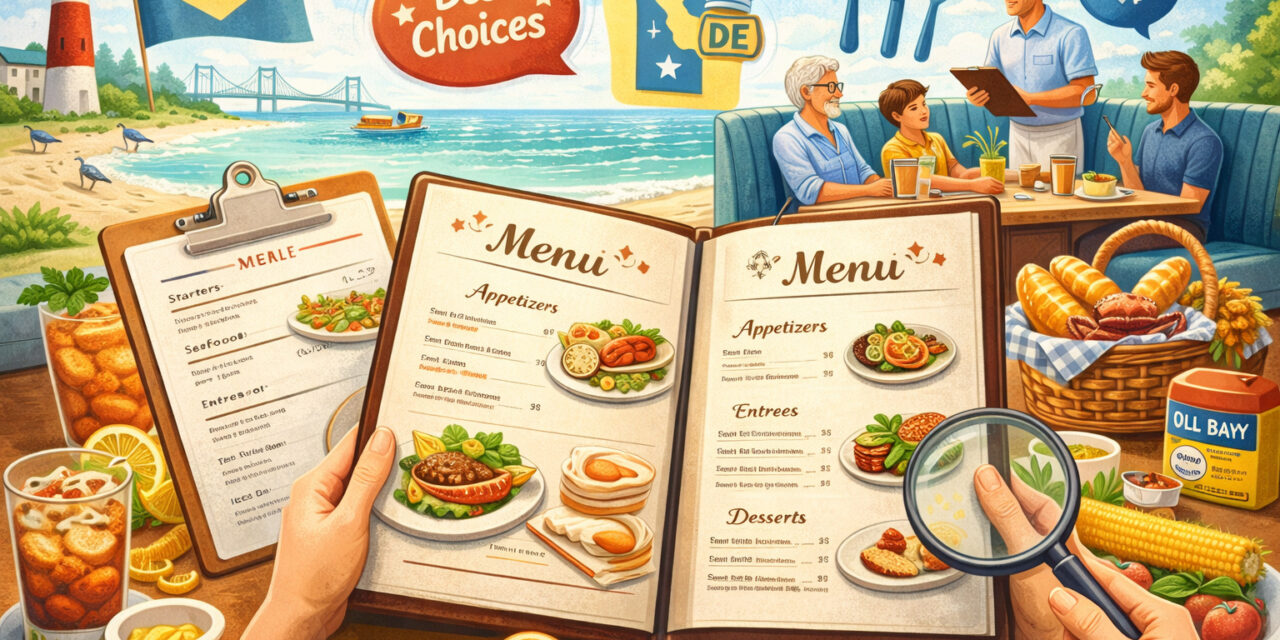
Menu design isn’t just decoration—it’s a sales tool, a brand statement, and a promise of what diners will experience. If you’re building or refreshing a menu in Delaware, you’re designing for a mix of beach-weekend crowds, commuter-lunch regulars, family diners, college-town energy, and year-round locals who know what they like.
The strongest menu design tips for Delaware diners balance clarity and personality, guide attention to your best items, and reflect local expectations—freshness, value, comfort, and a sense of place.
A menu that converts also reduces friction. People decide faster when the layout is easy to scan, item names are consistent, descriptions answer questions, and pricing feels fair. Meanwhile, staff benefit from fewer “What’s that?” moments, which speeds service and raises satisfaction.
The best menu design tips for Delaware diners also account for seasonality—especially in coastal areas where menus may shift for summer traffic—and for dietary needs that have become mainstream expectations.
Throughout this guide, you’ll find menu design tips for Delaware diners that help you: build a logical structure, choose fonts and colors that sell (without screaming), write descriptions that spark cravings, handle pricing psychology ethically, highlight local favorites, and keep your menu future-ready with digital options and data-driven updates.
Every section is written to be easy to read, with short paragraphs and practical examples so you can apply these menu design tips for Delaware diners immediately.
Understand What Delaware Diners Expect Before You Design

Delaware diners are not one single audience. A menu that works in a beach-town dining room may feel overpriced or confusing in a weekday lunch spot near offices, and a pub-style menu can feel out of place in an upscale dining room. That’s why the first set of menu design tips for Delaware diners begins with audience expectations and context.
Start by defining your top two or three diner groups. Are you serving families, tourists, business professionals, students, retirees, or late-night crowds? Each group scans menus differently. Families want quick clarity: kids’ options, shareables, allergy notes, and value bundles. Business lunch crowds want fast reads: soups, salads, sandwiches, bowls, and combo options. Tourist-heavy locations often need extra context: what makes the dish “local,” portion size hints, and clear beverage pairing cues.
Also think about Delaware’s rhythm: weekday regulars, weekend spikes, and seasonal surges in certain areas. Strong menu design tips for Delaware diners incorporate flexible sections you can rotate without redesigning everything. For example, a “Seasonal Specials” block that fits your grid every time makes updates smoother and keeps repeat customers curious.
Finally, consider what “value” means to Delaware diners in your category. Value isn’t always low—it can mean generous portions, premium ingredients, or a memorable experience. Your design should support your value story through layout, descriptions, and emphasis.
The best menu design tips for Delaware diners make sure the menu’s structure matches the way people actually order, not just the way the kitchen thinks.
Build a Menu Structure That Matches How People Order
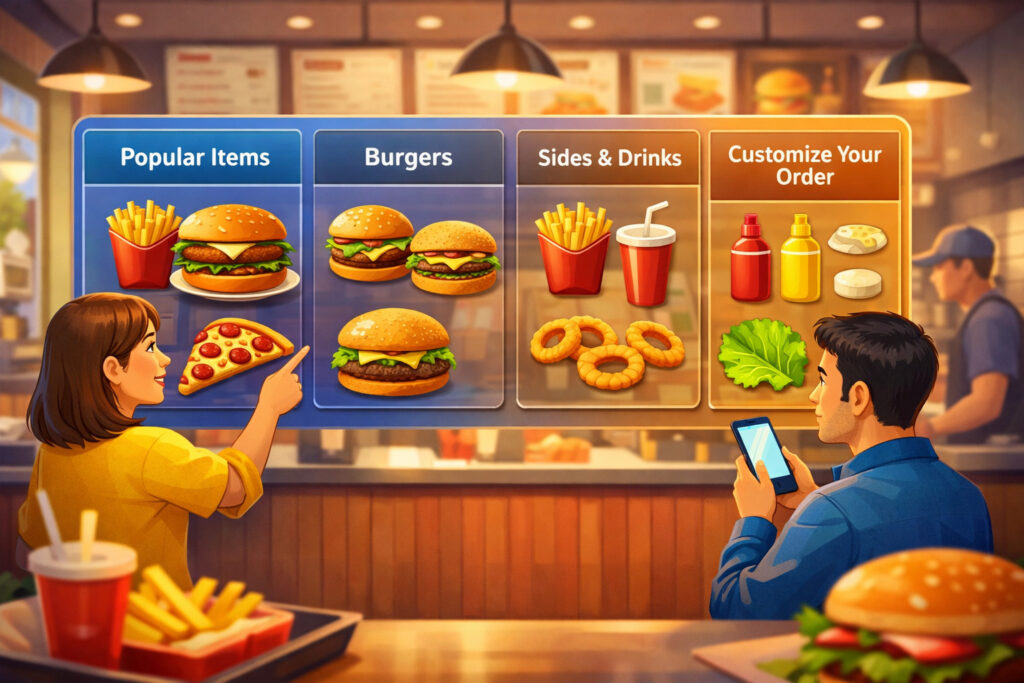
If your menu is hard to navigate, people default to safe choices or ask the server for recommendations—both of which can lower average check if you’re not guiding them. One of the most important menu design tips for Delaware diners is to build a structure that mirrors real ordering patterns.
Most diners begin with a quick scan for anchors: appetizers, signature items, and familiar categories. Put the “comfort zones” where eyes expect them, then introduce more adventurous items with supportive cues.
For example, place “Shareables” or “Starters” first, then “Salads & Bowls,” then mains, then sides and desserts. If you’re a breakfast or brunch location, lead with “Coffee & Drinks,” then “Eggs,” “Pancakes & Sweet,” and “Bowls & Lighter.” These are menu design tips for Delaware diners that reduce decision fatigue.
Next, use consistent category naming. If you use “Handhelds” on one page, don’t switch to “Sandwiches” later unless there’s a reason. Consistency signals professionalism and makes scanning effortless.
A clean structure also supports add-ons: a dedicated “Make It Your Way” line under each section—protein swaps, gluten-free bun, side upgrades—adds revenue without clutter when done right. This belongs in your playbook of menu design tips for Delaware diners.
Keep the number of sections reasonable. Too many categories make the menu feel chaotic, while too few hide variety. A useful rule is to keep categories to what a diner can understand in one glance.
When your structure is clear, you can design “spotlight zones” for your high-margin items without tricking anyone. That’s the goal of ethical, effective menu design tips for Delaware diners.
Use Menu Engineering to Feature What You Want People to Buy
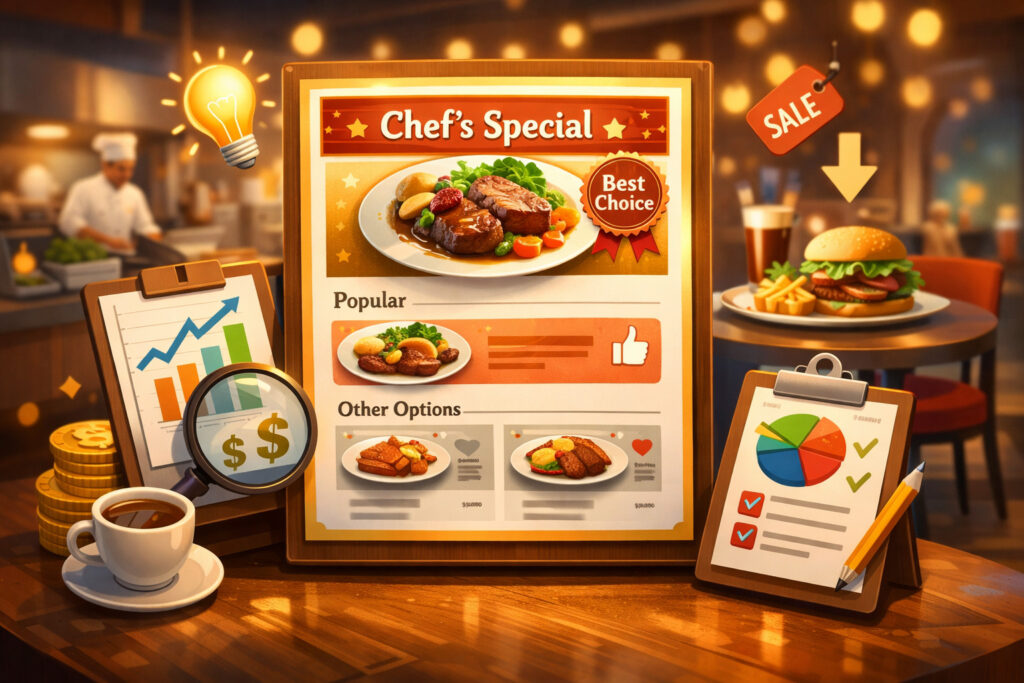
Menu engineering is the art and science of using placement, emphasis, and wording to increase sales of items that are profitable and popular. For a Delaware audience, the best approach is subtle and helpful, not pushy. These menu design tips for Delaware diners focus on guiding attention while keeping trust.
Start with your “stars”: items that sell well and have strong margins. These deserve prime real estate—usually the top-right area of a page, the first few items in a section, or a highlighted callout.
The point isn’t to hide other items; it’s to present your best work as the easiest choice. Consider adding a small icon like “House Favorite” or “Signature” next to two or three items per section. Too many icons reduce credibility, so restraint is key in menu design tips for Delaware diners.
Next are “plowhorses”: items that sell well but don’t make much money. You can improve profitability by adjusting portioning, bundling, or add-ons.
For example, a burger can remain a bestseller while you increase margin through premium cheese, extra patty options, or side upgrades. Your design should place add-ons near the item, not in a separate block that gets ignored.
This is one of the most practical menu design tips for Delaware diners because it improves revenue without changing what diners love.
Then there are “puzzles”: high margin but low popularity. Design can help by making these items easier to understand. Use clearer names, add a sensory description, and consider a small “Try This” tag.
Finally, “dogs” are low margin and low popularity—these might be removed, reworked, or moved to a less prominent spot. The best menu design tips for Delaware diners treat menu engineering as a way to simplify choices and highlight quality, not manipulate people.
Write Item Names That Feel Local, Clear, and Craveable
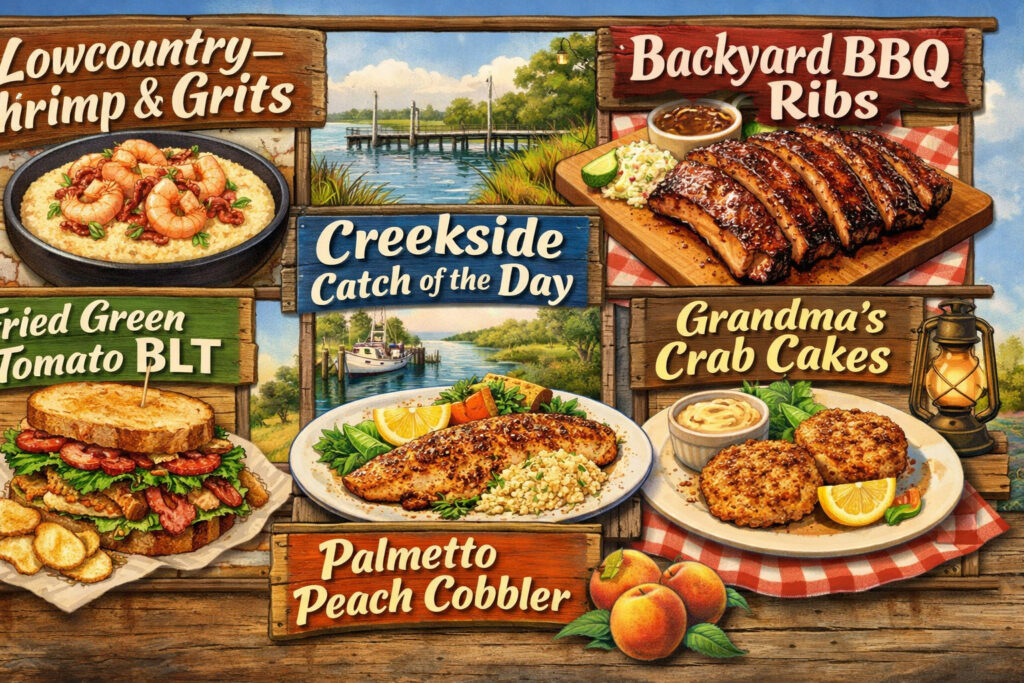
Names carry a lot of weight. They set expectations and influence what people are willing to pay. One of the most overlooked menu design tips for Delaware diners is balancing creativity with clarity. Clever names can attract attention, but if diners don’t understand what they’re getting, they hesitate.
Use a two-part naming approach: a simple base name plus a distinctive qualifier. For example: “Buttermilk Fried Chicken Sandwich” (base) + “Hot Honey & Pickles” (qualifier). Or “Seared Salmon” + “Lemon Herb Butter.”
These names read fast and help people decide. For Delaware diners, subtle regional cues also work well: references to coastal flavor profiles, seasonal produce, or classic comfort foods—without overdoing it. The strongest menu design tips for Delaware diners avoid gimmicks that feel forced.
If you want to lean into local identity, do it with honest specifics. Instead of vague claims, use meaningful descriptors: “daily catch,” “house-made,” “slow-roasted,” “chargrilled,” “hand-breaded.”
When you have a truly local ingredient partnership, mention it in a short way that doesn’t clutter. A small note like “Featuring local seasonal produce when available” can support the story without locking you into one supplier.
Also, keep naming consistent across sections. If you say “house-made” in one place, don’t switch to “homemade” elsewhere. Consistency is a subtle trust signal, and trust is central to menu design tips for Delaware diners.
Finally, avoid names that could confuse dietary needs. If something is vegetarian, say so—don’t make diners guess from a creative title.
Craft Descriptions That Sell Without Being Too Long
Descriptions are where appetite meets confidence. Good descriptions answer silent questions: What is it? How is it cooked? What will it taste like? How big is it? These menu design tips for Delaware diners focus on writing descriptions that move people toward “yes” while keeping the menu clean.
Start with a flavor-first sequence. Lead with cooking method or standout texture, then key ingredients, then finishing notes.
Example: “Crispy, hand-breaded chicken, hot honey drizzle, dill pickles, and slaw on a toasted bun.” This gives a clear mental picture quickly. Use sensory words sparingly: “crispy,” “smoky,” “bright,” “creamy,” “buttery,” “charred.” Too many adjectives feel like hype. Delaware diners, like most diners, respond best to descriptions that feel real.
Keep descriptions consistent in length inside each section. When one item has a long paragraph and others have short lines, the menu looks unbalanced.
A strong tactic from menu design tips for Delaware diners is using a “short description + optional details” approach: one tight line for every item, and occasional second lines only where clarification prevents returns or complaints (spice level, raw items, allergens, or unusual ingredients).
Use symbols carefully for dietary information. Clear markers like “GF option” or “V” can help, but explain them somewhere on the menu so diners aren’t guessing. Also, make spice levels obvious with a simple icon and a one-line legend. The goal is speed and comfort, which are central menu design tips for Delaware diners.
Finally, write in a voice that matches your brand. A coastal casual spot can be warm and friendly. A fine dining room can be elegant and minimal. Whatever your voice, keep it consistent so the menu feels intentional.
Choose Fonts and Typography That Improve Readability and Trust
Typography can quietly make or break your menu. If guests struggle to read, they order less confidently. One of the most practical menu design tips for Delaware diners is choosing fonts that work in real dining conditions: low light, busy tables, and quick scanning.
Use one primary font for item names and one complementary font for descriptions. Two fonts are usually enough. Too many fonts feel messy and reduce perceived quality. For item names, a clean serif or a highly readable sans-serif can work.
For descriptions, prioritize legibility over style. Your menu should be easy to read for a wide range of ages, including older diners who may prefer larger text. This matters in Delaware communities with a broad age mix, making typography a key part of menu design tips for Delaware diners.
Size matters more than most owners think. If your descriptions are tiny to fit more items, you’re lowering conversion. Instead, reduce the number of items or tighten wording. Use spacing, not decorative lines, to separate items.
White space gives the eye rest and makes the menu feel premium. These menu design tips for Delaware diners often increase sales because they help diners decide faster and with more confidence.
Also watch your hierarchy. Category headers should be clearly larger or bolder than item names, and item names should stand out from descriptions. The price should be visible but not screaming. A clean hierarchy helps diners orient instantly and helps servers point to sections quickly.
Avoid all caps for long text. It’s harder to read and can feel like shouting. Use emphasis sparingly: a bold item name, a lighter description, and a consistent rhythm down the page. These menu design tips for Delaware diners might feel “design-y,” but they directly affect how much guests order and how satisfied they feel.
Use Color, Imagery, and White Space Without Overwhelming the Menu
Color is powerful, but it must support readability and appetite. A common mistake is using too many colors, busy backgrounds, or low-contrast text. One of the best menu design tips for Delaware diners is to keep the menu visually calm so the food remains the star.
Pick a simple palette that matches your brand environment. A coastal vibe might use soft blues and sandy neutrals. A classic diner style might use warm reds and creams. A modern bistro might use black, white, and one accent color.
Use your accent color for small highlights: section headers, icons, or special callouts. This keeps attention on what matters, a key idea in menu design tips for Delaware diners.
Imagery is tricky. Photos can boost sales for casual concepts, especially for signature items or desserts. But too many photos can make the menu feel cluttered or low-end. If you use photos, use a few high-quality images that match real plating.
Never use stock photos that don’t reflect your kitchen. Delaware diners—especially repeat locals—notice mismatches quickly, and trust drops. The strongest menu design tips for Delaware diners protect credibility.
White space is your friend. It makes the menu feel easier and more premium. Instead of squeezing in more items, consider removing weaker sellers and making your best items easier to find. When the menu breathes, the diner relaxes, and relaxed diners spend more.
Also avoid patterned backgrounds behind text. If you want texture, use it lightly and keep text on a solid or semi-opaque panel. These are simple menu design tips for Delaware diners that reduce friction and increase ordering confidence.
Price Presentation That Feels Fair and Encourages Upgrades
Pricing isn’t just numbers—it’s psychology. Your menu design can make prices feel fair, transparent, and aligned with quality. Effective menu design tips for Delaware diners use pricing to support trust while still increasing average check.
First, use consistent formatting. Choose a style—like “14” or “14.00”—and stick to it. Many restaurants prefer no cents for a cleaner look. Place prices in a consistent location, usually near the item name or aligned to the right.
However, avoid “price columns” that encourage shoppers to scan only for the cheapest item. A gentle approach is placing prices after the description in the same line, so attention stays on the food first. These are time-tested menu design tips for Delaware diners that keep focus on value, not just cost.
Second, make upgrades easy. Create clear add-ons: “Add shrimp,” “Add avocado,” “Upgrade side,” “Make it gluten-free,” “Add protein.” Put them right under the relevant items. Delaware diners often appreciate customization when it’s simple and not awkward. Add-on language should be short and consistent.
Third, use bundles where they make sense. Lunch combos, family bundles, and prix-fixe options can increase perceived value and simplify ordering.
If you’re in a tourist-heavy area during peak season, a streamlined combo menu can reduce decision time and speed throughput. That’s a very practical angle of menu design tips for Delaware diners.
Finally, be transparent about market pricing. If you offer seafood or seasonal items with fluctuating costs, communicate it clearly: “Market price” or “Seasonal pricing.” People accept variability when you set expectations. The best menu design tips for Delaware diners recognize that price trust is part of brand trust.
Highlight Local and Seasonal Items in a Credible Way
Many diners love the idea of “local,” but they also want it to be real. Delaware diners, especially regulars, can be skeptical of vague claims. One of the most effective menu design tips for Delaware diners is to highlight local and seasonal items with credibility and simplicity.
Use a dedicated “Seasonal” or “Limited-Time” block that’s easy to update. Keep it small—three to six items. Too many “limited-time” items makes the menu feel unstable. When you highlight local ingredients, do it with specific, accurate language. A short line like “Seasonal vegetable blend (changes weekly)” can be more believable than a long paragraph.
Consider adding a small “Delaware-inspired” section if your concept fits. This can include regional comfort favorites, coastal flavors, or house specialties that feel tied to place. The key is authenticity.
If you don’t have direct sourcing details, focus on technique and flavor rather than making claims you can’t support. Trust is a recurring theme in menu design tips for Delaware diners because repeat business depends on it.
Seasonality also affects design logistics. Build your layout so seasonal items can rotate without breaking spacing. Use a consistent box or highlight style so guests learn where to look every visit. This makes the menu feel fresh without redesigning from scratch.
Also think about beverage seasonality. Summer might call for refreshing cocktails, iced coffee options, or fruit-forward mocktails. Cooler months might emphasize warm drinks or richer flavors.
Integrating these shifts is part of future-ready menu design tips for Delaware diners because it keeps your menu aligned with diner mood and demand.
Design for Dietary Needs, Allergens, and Modern Preferences
Dietary needs aren’t niche anymore. Gluten-free options, vegetarian choices, dairy-free swaps, and allergy awareness have become standard expectations. One of the most important menu design tips for Delaware diners is making these options visible and easy to understand without turning your menu into a medical form.
Start with clear, simple indicators. Use “V” for vegetarian, “VG” for vegan if you offer it, and “GF option” for items that can be made gluten-free. Then add a short legend. Avoid guessing—only mark what your kitchen can consistently deliver.
If cross-contact is possible, include a gentle note like “Please inform your server of allergies.” This reduces risk and sets realistic expectations. These menu design tips for Delaware diners protect guests and protect your business.
Offer smart swaps. If you can do a gluten-free bun, a dairy-free dressing, or a plant-based protein option, list it as an add-on. Many diners will choose your restaurant because it’s easy for mixed groups. When groups feel accommodated, they order more, return more, and recommend more.
Spice level matters too. If you have heat, label it. If items include raw or undercooked ingredients, note it. Clear communication prevents disappointment and refunds.
Finally, don’t hide lighter options. Delaware diners include many health-conscious guests who still want satisfying flavors. Use a “Lighter” or “Fresh” subcategory only if you can do it without sounding judgmental.
The best menu design tips for Delaware diners treat dietary preferences as normal choices and keep the tone welcoming.
Make the Menu Mobile-Friendly and Digital-Ready
Digital menus are now an expected option in many restaurants, even if you still offer printed menus. A major set of menu design tips for Delaware diners involves making sure your menu works on phones, tablets, and online ordering pages.
If you use QR codes, keep them easy to find and test them often. The digital menu should be fast to load, readable without zooming, and structured with tappable categories. Avoid uploading a tiny PDF that forces pinching and scrolling.
Instead, consider a responsive web page layout where sections collapse neatly. Delaware diners on the go—especially during busy seasons—will abandon slow, confusing digital menus.
For online ordering, clarity beats creativity. Item names should match what people search for, descriptions should clearly list included sides, and add-ons should be straightforward.
If your printed menu uses playful names, add a clarifying subtitle for digital contexts. This is one of the most practical menu design tips for Delaware diners because digital confusion leads to wrong orders, refunds, and negative reviews.
Accessibility matters too. Use high contrast, readable font sizes, and simple navigation. Consider adding filters like “Gluten-Free Options,” “Vegetarian,” or “Spicy.” These features reduce friction and increase conversion.
Future prediction: digital menus will become more personalized and data-driven. Expect more restaurants to adjust menu placement based on sales data, highlight items differently at lunch vs dinner, and test variations seasonally.
The best menu design tips for Delaware diners include building a menu system that can evolve—meaning your design files, item database, and categories should be easy to update without starting over.
Create a Delaware-Friendly Beverage Section That Boosts Check Size
Beverages are often high-margin, but many menus under-sell them by treating drinks as an afterthought. One of the smartest menu design tips for Delaware diners is giving beverages a structure that encourages “one more thing” without pressure.
Start with placement. Put beverages where diners will see them early—either at the top of the menu or on a dedicated panel. If you’re a café or brunch concept, lead with drinks.
If you’re dinner-focused, consider a small “Featured Cocktails” or “Zero-Proof Favorites” box near the top. Many diners decide on a drink quickly; if they don’t see options, they default to water or a basic choice.
Use short, flavorful descriptions for signature beverages. A line like “Citrus-forward, lightly sweet, refreshing finish” helps a guest choose even if they don’t recognize ingredients. These menu design tips for Delaware diners also reduce the need for staff explanations during rushes.
Don’t neglect non-alcoholic options. Seasonal mocktails, flavored lemonades, specialty teas, and craft sodas can lift check averages and make the menu more inclusive. This is especially valuable for groups where not everyone drinks alcohol.
Pricing should be simple. Create tiers: standard options, premium options, and a few signature features. Consider pairing suggestions: “Pairs well with fried foods,” “Great with seafood,” or “Best with desserts.”
Keep it subtle and helpful. Beverage design is one of those menu design tips for Delaware diners that can increase revenue without changing your kitchen at all.
Use Layout Patterns That Guide the Eye Naturally
People don’t read menus like books. They scan. They bounce between sections. They look for anchors. One of the most reliable menu design tips for Delaware diners is building a layout that guides the eye in a calm, predictable way.
Use a clear grid. Keep category headers aligned. Keep item formatting consistent. If you highlight items, highlight only a few. A common technique is using a light box around a signature trio—three items you’re proud of and want to sell.
Another technique is placing high-performing items at the top and bottom of each category, because those positions get extra attention.
Avoid clutter like too many lines, icons, and callouts. When everything is emphasized, nothing is emphasized. Delaware diners often appreciate straightforward menus—especially in casual and family settings—so clarity beats decoration.
Line length matters. Don’t stretch descriptions across the full width of a large menu; long lines are harder to read. Use columns or narrower text blocks so scanning is easier. White space around categories acts like a visual pause, making choices feel less overwhelming.
Also consider the physical handling of the menu. If it’s a single sheet, make sure both sides are organized logically. If it’s a booklet, keep sections where guests expect them and avoid jumping around.
These menu design tips for Delaware diners reduce confusion, speed up ordering, and improve table turns during busy times.
Keep Your Menu Updated With a Simple Process and Real Data
A menu that never changes can feel stale. A menu that changes too often can frustrate regulars. The best menu design tips for Delaware diners recommend a steady update rhythm backed by real numbers.
Track what sells, what makes money, and what drives reviews. You don’t need fancy tools to start—weekly item counts and margin estimates can reveal patterns quickly.
Identify your top sellers, your underperformers, and your high-margin sleepers. Then adjust placement and wording before you change recipes. Sometimes, a clearer name or a more appetizing description is all it takes.
Update seasonally where it makes sense. Coastal areas may warrant summer specials and lighter drinks, while cooler seasons may call for comfort additions. But keep your core favorites stable so locals feel grounded.
Delaware diners often return for “their” item; removing it abruptly can cost repeat business. A smart approach from menu design tips for Delaware diners is to keep staples and rotate a seasonal block.
Also establish an internal update process. Who edits the menu? Who proofreads? Who verifies allergens and prep consistency?
One typo can confuse diners; one inaccurate ingredient listing can cause real problems. Keep a single “source of truth” for item names, descriptions, and prices so your printed and digital menus match.
Future prediction: more restaurants will run A/B tests on menu layouts digitally—trying different item order, highlight styles, and photo placement—and then applying winners to print menus. Staying flexible is part of modern menu design tips for Delaware diners, and it helps you stay competitive without constant redesign costs.
Common Menu Design Mistakes That Turn Delaware Diners Away
Even great food can be undermined by design mistakes that create friction. A strong set of menu design tips for Delaware diners includes knowing what to avoid so your menu supports the experience instead of complicating it.
One major mistake is overloading the menu with too many items. Variety feels good until it becomes overwhelming. When guests can’t decide, they choose cheaper safe items or ask for help, slowing service. Cutting low performers often increases sales of what remains because attention concentrates.
Another mistake is inconsistent wording. If one section uses detailed descriptions and another section uses vague names, the menu feels uneven. Inconsistent price formatting also triggers distrust. Delaware diners—especially locals—notice these details over repeated visits.
Poor readability is also a deal-breaker: tiny fonts, low contrast, glossy glare, and busy backgrounds. These choices make the menu physically hard to use. A menu should be readable at a glance, even in dim lighting.
Misleading photos are risky. If the photo doesn’t match plating, guests feel disappointed even if the food tastes great. If you can’t commit to accurate photography, it’s better to use none and focus on great descriptions—one of the more practical menu design tips for Delaware diners.
Finally, hiding important information hurts the experience: spice levels, raw items, allergens, or what sides are included. Clarity prevents returns and negative reviews. Your menu should reduce questions, not create them. Avoiding these pitfalls is just as important as applying positive menu design tips for Delaware diners.
FAQs
Q.1: What are the most important menu design tips for Delaware diners if I can only change a few things?
Answer: Start with clarity: simplify categories, improve readability, and rewrite descriptions for your top 10 items. These menu design tips for Delaware diners often produce quick results because they reduce decision friction. Next, reposition your most profitable, best-reviewed items to more visible spots.
Finally, add simple, relevant add-ons (side upgrades, protein adds, beverage pairings) near the items where they apply. Small layout and wording changes can increase sales without changing recipes or prices, especially when the menu becomes easier to scan in real dining conditions.
Q.2: How many items should a Delaware restaurant menu have?
Answer: There’s no single perfect number, but most menus perform better when they are curated rather than crowded. A useful approach within menu design tips for Delaware diners is to keep each category focused: enough options to feel flexible, not so many that guests hesitate.
If you have a large menu today, try removing or rotating low performers. Many restaurants see higher sales per item and faster ordering when the menu feels intentional. If you serve different dayparts, consider separate menus (lunch vs dinner) to keep each one lean and relevant.
Q.3: Should I use photos on my menu?
Answer: Photos can work well for casual concepts, quick service, desserts, and signature items—especially if tourists or first-time guests are common. But photos must be high-quality and match real plating.
One of the safest menu design tips for Delaware diners is using only a few photos for your strongest sellers rather than filling the menu with images. If you can’t maintain photo accuracy through seasonal changes, lean on clean design and craveable descriptions instead.
Q.4: How do I make my menu more appealing to both locals and seasonal visitors?
Answer: Use a stable core plus a small seasonal block. Locals appreciate consistency, while visitors enjoy discovering “what’s special right now.” This is one of the most effective menu design tips for Delaware diners because it balances familiarity with excitement.
Make the seasonal block easy to update, and keep explanations short so visitors understand items quickly. Also, make value clear: portion cues, included sides, and straightforward pricing.
Q.5: What’s the best way to handle dietary preferences and allergens on the menu?
Answer: Use clear symbols and a short legend, and train staff to answer questions consistently. Only mark items if your kitchen can reliably deliver the claim.
One of the most responsible menu design tips for Delaware diners is including a brief allergy note encouraging guests to inform servers, because it reduces risk and sets expectations. Offer simple swaps where possible and make them visible as add-ons to reduce back-and-forth.
Q.6: Are digital menus worth it, and what’s changing next?
Answer: Digital menus are worth it when they’re mobile-friendly, fast, and easy to navigate. Uploading an unreadable PDF often creates frustration. A future-focused part of menu design tips for Delaware diners is building a responsive digital menu and an ordering-friendly item structure with clear modifiers and options.
Looking ahead, more restaurants will personalize digital menus by daypart and test different layouts based on sales data. Staying organized now makes those upgrades easier later.
Conclusion
Great menu design is a blend of psychology, hospitality, and brand identity. The most effective menu design tips for Delaware diners focus on making decisions easier, highlighting your best offerings, and reinforcing trust through clarity and consistency.
When diners can quickly understand what you serve, how it tastes, and what it costs, they order with confidence—and confident diners tend to order more.
A Delaware-friendly menu respects the reality of your audience mix: locals who return for favorites, weekend diners who want comfort and value, and seasonal visitors who appreciate guidance and standout specialties.
Your structure should match ordering behavior, your typography should be readable in real dining conditions, your descriptions should be craveable without being long, and your pricing should feel fair and transparent.
Thoughtful design also reduces staff workload by preventing confusion about sides, spice levels, and dietary needs—benefits that show up in smoother service and better reviews.
Most importantly, treat your menu as a living tool. Review performance, rotate seasonal highlights, and keep your printed and digital menus aligned.
As dining continues evolving—especially with mobile menus, online ordering, and data-driven optimization—restaurants that follow modern menu design tips for Delaware diners will stay ahead.
If you apply the strategies in this guide, you’ll build a menu that feels welcoming, unmistakably local, and designed to convert casual browsing into happy, repeat customers.