
Understanding Delaware business license requirements is one of the first practical steps a small business owner should take before opening, selling, hiring, advertising services, or signing customer contracts. A business license is not just a formality.
It connects your business activity to the right state tax accounts, confirms that your operation is recognized by the Delaware Division of Revenue, and helps you identify whether local permits, zoning approval, professional licensing, or industry-specific approvals may also apply.
For many small businesses, the main license starts with the Delaware business license issued through the Division of Revenue, often through the Delaware One Stop business license system.
Delaware One Stop explains that businesses generally need to register with the Division of Revenue by applying for a business license if they plan to have property or a business location in Delaware, have employees working in Delaware, or generate sales in Delaware.
That said, licensing is layered. A consultant working from a home office, a restaurant leasing a storefront, a contractor bidding on renovation jobs, an online seller shipping products, and a professional services firm may all face different requirements.
Formation, tax registration, local permits, gross receipts tax, zoning rules, professional licensing, and renewals each serve a different purpose.
This guide is for general educational purposes only and is not legal, tax, accounting, or regulatory advice. Requirements can vary by business type, industry, city, county, ownership structure, and agency rules, so business owners should confirm details with the appropriate agency or a qualified professional before relying on any checklist.
What a Delaware Business License Means
A Delaware business license is a state-level license that allows a business to conduct a trade, profession, or business activity connected to Delaware.
For many small businesses, this is the core operating license issued through the Delaware Division of Revenue. It is different from forming an LLC or corporation, registering a trade name, obtaining a professional license, or securing a local zoning approval.
The state business license helps Delaware identify what your business does, where it operates, and which tax responsibilities may apply. It is closely connected to tax registration because Delaware imposes gross receipts tax on many sellers of goods and providers of services rather than a state or local sales tax.
The Division of Revenue explains that Delaware has an annual business license requirement and a gross receipts tax imposed on sellers of goods or providers of services, with filings generally made monthly or quarterly depending on business activity.
For a small business owner, this means the license is not only permission to operate. It is also part of the tax and compliance setup. When you apply, you may need to choose a business activity category, provide ownership or entity details, list your business address, and identify whether you have employees.
A Delaware business license may apply to a sole proprietorship, LLC, corporation, partnership, nonprofit activity with taxable operations, online business, home-based business, or out-of-state business conducting sales or services in Delaware. The exact category matters because it can affect license fees, gross receipts tax filing, and related obligations.
Why Delaware Business License Requirements Matter
Delaware business licensing requirements matter because they affect how legally, financially, and operationally ready your business is to operate. Many entrepreneurs focus first on choosing a name, designing a website, opening social media accounts, or registering an LLC.
Those steps can be important, but they do not automatically satisfy Delaware business permit requirements or tax registration obligations.
Licensing helps prevent mismatches between what your business is doing and how it is registered. A retailer may need a state business license, gross receipts tax setup, local approvals, and possibly a certificate of occupancy.
A contractor may need a Delaware state business license, contractor registration, trade-specific licenses, local permits, and building permits depending on the work. A restaurant may need the general business license plus food service approvals, inspections, zoning approval, signage permits, and possibly alcohol-related approvals if applicable.
Licensing also matters because banks, payment processors, landlords, vendors, marketplaces, lenders, and insurers may ask for proof that your business is properly registered.
A business bank account, merchant account, lease, commercial insurance policy, or supplier account can be delayed if your legal name, DBA, address, tax identification, and license records do not match.
For startups and freelancers, the benefit is practical. Clear licensing records make it easier to send invoices, accept card payments, manage bookkeeping, file taxes, hire employees, and respond to agency notices. They also help you avoid building your business on assumptions that later require corrections.
Delaware’s online systems are designed to connect licensing with broader startup steps. The Division of Revenue states that Delaware’s One Stop Business Registration and Licensing System allows businesses to obtain a Delaware business license and register online with the Division of Revenue, Division of Unemployment Insurance, and Office of Workers Compensation, and it also links to entity and federal EIN resources.
Who Needs a Delaware Business License?
Many businesses that operate, sell, provide services, employ workers, or maintain a business presence in Delaware need a Delaware business license.
This includes many small business owners, startups, freelancers, consultants, contractors, retailers, restaurants, online sellers, and home-based businesses. The requirement does not depend only on whether your business has a storefront.
Delaware One Stop identifies three major triggers for registration with the Division of Revenue: having property or a business location in Delaware, having employees working in Delaware, or generating sales in Delaware.
These triggers are useful starting points, but they do not answer every situation. Your industry, business structure, professional activity, local jurisdiction, and customer location can all change the licensing picture.
A Delaware small business license may be needed even if the owner works alone. A sole proprietor who provides services, a home-based consultant with Delaware clients, or an online seller operating from a Delaware address may still need to apply.
Similarly, an LLC or corporation formed with the Delaware Division of Corporations may still need a separate Delaware state business license before conducting business.
Business owners should also consider whether they need more than one license category. Some businesses sell products and provide services. Others operate multiple locations or perform work in different municipalities.
A company that begins as consulting may later add training, retail sales, installation, or subscription services, which can change tax and licensing obligations.
Sole Proprietorship License Needs
A sole proprietorship is one of the simplest ways to operate a small business, but simple does not mean license-free. A sole proprietor is an individual operating a business without forming a separate legal entity such as an LLC or corporation. If that person conducts business activity connected to Delaware, a Delaware business license may be required.
For example, a freelance designer, mobile notary, bookkeeper, photographer, tutor, landscaper, or repair technician may need a Delaware business license if they serve customers, generate sales, or operate from Delaware.
If they use a business name that is different from their legal name, they may also need to register a trade name or DBA through the appropriate process.
Sole proprietors should pay close attention to the business activity category on the Delaware business license application. A service business, retail business, contractor, professional activity, and rental-related activity may be treated differently for licensing or gross receipts tax purposes.
A sole proprietor may also need an EIN in some circumstances, especially when hiring employees, setting up payroll, opening certain business bank accounts, or separating business finances. Even when an EIN is not strictly required, using one can make business banking and tax organization cleaner.
LLC Licensing Requirements
An LLC is a business entity formed through the Delaware Division of Corporations, but forming the LLC is not the same as obtaining a Delaware business license.
The Division of Corporations handles entity formation and related entity filings, while the Division of Revenue handles business licensing and many tax accounts. The Division of Corporations is the state office for entity matters such as forming Delaware corporations and LLCs.
For an LLC, the licensing process usually begins after choosing the business structure, forming the entity if needed, appointing a registered agent, and getting an EIN. The LLC then applies for the Delaware state business license under the correct legal name and business activity.
An LLC may need local permits, professional licenses, or industry-specific approvals depending on what it does. For example, an LLC used for a consulting business may only need the state license and applicable local home occupation approval, while an LLC used for a restaurant may need health permits, inspections, zoning approval, and a certificate of occupancy.
The LLC should keep license records under the exact legal entity name. If the company uses a different public-facing name, the owner should check trade name requirements. Inconsistent names across the LLC formation, business license, bank account, payment processing account, contracts, invoices, and insurance documents can create delays.
Corporation Licensing Requirements
A corporation formed in Delaware also needs to distinguish entity formation from business licensing. A certificate of incorporation creates the corporation as a legal entity, but it does not automatically authorize the corporation to operate every type of business activity.
If the corporation conducts business activity that triggers Delaware licensing, it should apply for the appropriate Delaware business license and register for applicable taxes.
Corporations often face more formal annual obligations than very small sole proprietorships. The Division of Corporations provides annual report and tax information for Delaware entities, and it warns businesses to be alert to deceptive solicitations that do not come directly from the state or the entity’s Delaware registered agent.
A small corporation may also need a city license, county permit, professional license, employer registration, or industry approval.
For example, a corporation that operates a retail shop may need a state business license, local business license, zoning approval, signage permit, and gross receipts tax setup. A corporation offering regulated professional services may need professional licensing for individuals and, in some cases, entity-level approvals.
Corporations should keep board approvals, ownership records, tax records, license confirmations, payroll registrations, and annual obligations organized. Licensing is easier to manage when the business has a compliance calendar and a single document folder for state, local, tax, and professional records.
Delaware Business License vs Business Registration

One of the most common mistakes small business owners make is assuming that Delaware business registration and a Delaware business license are the same thing. They are related, but they are not interchangeable.
Business registration can mean several different things. It may refer to forming an LLC, corporation, limited partnership, or other business entity with the Delaware Division of Corporations.
It may also refer to registering with the Division of Revenue for tax and licensing purposes. In some contexts, it may refer to registering a trade name, employer account, professional license, local license, or tax account.
A Delaware business license is more specific. It is typically the state license issued through the Division of Revenue that connects your business activity to Delaware’s licensing and tax system. When people ask how to get a business license in Delaware, they usually mean applying through Delaware One Stop or the Division of Revenue.
A business entity, such as an LLC or corporation, gives your business a legal structure. A business license gives you operating authorization for a business activity. A professional license allows a person or firm to provide regulated services.
A local license or permit allows the business to operate in a specific city, town, or county. A zoning approval confirms that your location can be used for your type of business.
For example, a bakery may form an LLC, register its trade name, obtain an EIN, apply for a Delaware business license, register for gross receipts tax, secure local zoning approval, obtain food service permits, pass inspections, set up payroll, and open a business bank account. Each step serves a different function.
For additional background on entity setup, this guide to registering a business in Delaware can help business owners understand how formation, licensing, taxes, and compliance fit together.
State Business License Requirements for Small Businesses

The Delaware state business license is the core license many small businesses need before operating. It is commonly obtained through Delaware One Stop, which helps businesses register with the Division of Revenue and, when relevant, connect to employer registration and workers’ compensation steps.
A Delaware business license application generally asks for identifying information about the owner or entity, business address, mailing address, business activity, ownership details, and tax-related information. The system may also ask whether the business has employees or plans to hire employees.
For many businesses, the most important part of the application is choosing the correct business activity. Your activity category can affect your license type, gross receipts tax rate, filing frequency, and related requirements.
A business that sells products, repairs property, provides professional services, rents property, offers food, performs construction, or operates as a wholesaler may not fit neatly into one general description.
Delaware allows some business licenses to be obtained for a one-year or multi-year period. The Division of Revenue notes that a three-year license is not discounted; businesses pay three times the regular yearly license fee for that option.
A longer license term may reduce renewal frequency, but it does not eliminate tax filings, local permits, professional renewals, or the need to update records after business changes.
Small businesses should also understand that the Delaware business tax license is not a replacement for local permits. If you operate in a city, town, or county that requires its own license or zoning approval, the state license alone may not be enough.
Home-Based Business Licensing
A home-based business may still need a Delaware business license if it operates from Delaware, generates sales in Delaware, or otherwise meets the state’s licensing triggers. Working from a home office does not automatically exempt a business from licensing or tax registration.
Common home-based businesses include consulting, design, bookkeeping, tutoring, online retail, handmade goods, photography, coaching, repair scheduling, virtual assistance, and professional services. These businesses may have limited customer traffic, but they still may be conducting business activity.
Local zoning is especially important for home-based businesses. A city, town, or county may restrict signage, customer visits, employees, inventory storage, deliveries, equipment, noise, parking, or commercial vehicles.
A business that seems low-impact online may still violate local rules if it creates regular traffic, stores inventory in a garage, receives commercial deliveries, or uses the home for production.
Home-based owners should check state licensing, local home occupation rules, landlord or HOA restrictions, insurance coverage, and tax registration before assuming they can operate freely. If food, childcare, health, beauty, construction, or regulated professional services are involved, additional agency approvals may apply.
Online Business Licensing
An online business may need a Delaware business license depending on where it operates, where the owner manages it, where inventory is stored, whether it has employees, and whether it generates sales connected to Delaware. Online does not mean invisible to licensing systems.
Examples include ecommerce shops, marketplace sellers, subscription businesses, digital product sellers, remote consultants, online course providers, software providers, and creators selling merchandise. If the business is run from a Delaware location or has Delaware sales activity, the owner should check Delaware business licensing requirements.
Online businesses should also understand the difference between marketplace platform requirements and state licensing. A marketplace may request a tax ID, bank account, identity verification, or business information, but that does not replace the Delaware state business license or local rules.
Delaware does not have a state or local sales tax, but the Division of Revenue explains that Delaware has gross receipts tax imposed on sellers of goods and providers of services. For ecommerce sellers, that makes gross receipts tax classification and recordkeeping especially important.
Local Licenses, Zoning, and City or County Permits
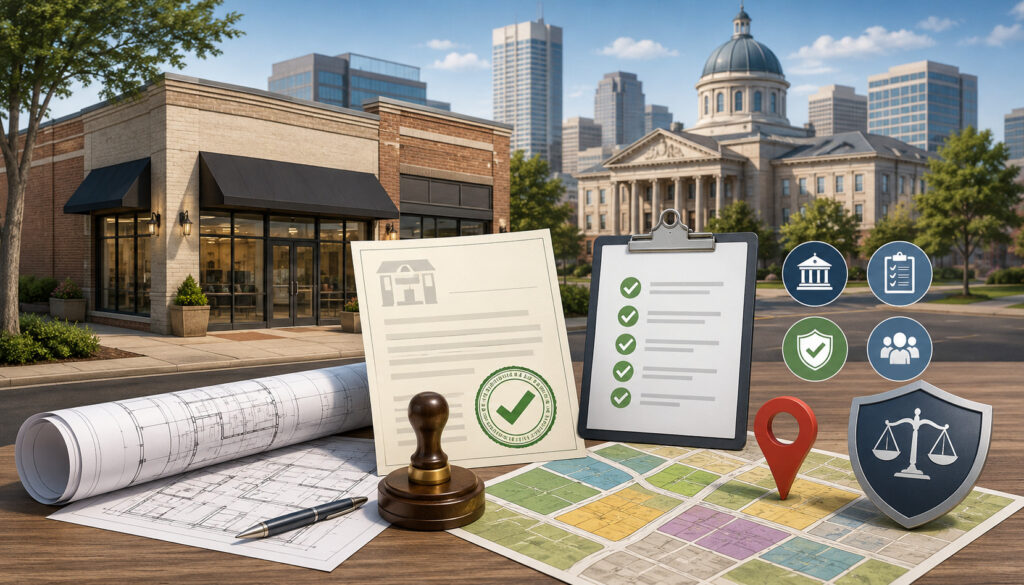
A Delaware local business license may be required in addition to the state business license. Local requirements depend on where the business is physically located and where it provides sales or services.
Delaware’s Business First Steps guidance explains that a principal business location and any additional sites where sales or services are provided determine whether additional county, city, or town licenses or permits are needed.
This is one of the most important points for small business owners to understand. A state license does not automatically satisfy local rules.
Cities, towns, and counties may have separate business license applications, zoning approvals, building permits, sign permits, health inspections, fire reviews, certificates of occupancy, contractor licenses, food truck rules, or home occupation permits.
For example, Wilmington states that business owners operating within city limits must have both a state business license and a city business license. A business in another municipality may face different procedures, departments, forms, and fees.
Local rules often become important when a business signs a lease. A landlord may advertise a space as “commercial,” but that does not guarantee that your exact use is permitted. A yoga studio, retail shop, restaurant, salon, warehouse, repair shop, contractor office, and professional office may be treated differently under zoning codes.
Local Permit Requirements
Local permit requirements may apply before a business opens, changes use, renovates a space, installs signage, serves food, hosts customers, or stores equipment. These requirements are not always called “business licenses,” which is why business owners should ask local offices about permits, approvals, inspections, and zoning.
A local service provider may need a city license to operate in a municipality. A contractor may need local contractor registration or permits for specific jobs. A retailer may need a certificate of occupancy and sign permit. A restaurant may need food approvals, building permits, fire review, grease management review, and outdoor seating approval if applicable.
Even a business without a storefront may need local approval. Mobile businesses, home-based businesses, delivery-based businesses, pop-up vendors, and event sellers may face local rules tied to where they operate.
Before signing a lease, ask the local permitting or planning office whether your intended use is allowed at the address. If improvements are needed, ask whether permits must be issued before construction begins.
Zoning Approval
Zoning approval confirms whether your business activity is allowed at a particular location. This matters for storefronts, restaurants, offices, warehouses, salons, gyms, home-based businesses, contractor yards, childcare facilities, automotive services, and many other operations.
Zoning rules can affect hours, parking, signage, customer traffic, outdoor storage, noise, delivery access, waste handling, and building use. A location that works for a professional office may not work for food production. A home that works for remote consulting may not work for customer appointments, inventory pickup, or equipment storage.
The City of Dover’s planning and inspections department, for example, provides business license and zoning contacts through its planning and inspections office. Other local governments have their own departments and processes.
A zoning review should happen early. If you wait until after signing a lease, buying equipment, or announcing an opening date, a zoning issue can become expensive. Business owners should also ask whether a change of use, building inspection, occupancy approval, or fire inspection is needed before opening.
Industry-Specific and Professional Licensing Requirements
Some businesses need more than a general Delaware business license. Professional licensing, occupational licensing, industry permits, contractor registration, facility licensing, inspections, or agency approvals may apply depending on what the business does.
Delaware’s DELPROS system allows users to apply for, manage, renew, and verify professional licenses through the state’s professional licensing platform. This can be relevant for regulated fields such as healthcare, real estate, accounting, cosmetology, engineering, architecture, counseling, pharmacy, and other licensed professions.
Professional licensing may apply to the individual, the business entity, or both. For example, a licensed professional may need an individual Delaware professional license, while the firm may need a business license and possibly an entity-level permit.
A salon, medical office, pharmacy, or professional practice may need facility or establishment approvals in addition to individual credentials.
Industry-specific requirements are especially common in construction, food service, childcare, healthcare, alcohol-related activity, transportation, finance, environmental services, and certain sales activities. These rules may come from state agencies, local governments, or both.
For a wider startup compliance perspective, this overview of legal requirements for starting a Delaware business can help owners think beyond formation and licensing into taxes, hiring, governance, and ongoing obligations.
Professional Licenses
A Delaware professional license may be required when the business involves regulated skill, public safety, fiduciary responsibility, health, financial trust, or specialized training. Examples may include medical providers, nurses, therapists, accountants, real estate professionals, architects, engineers, cosmetologists, pharmacists, and certain other occupations.
A professional license is not the same as a Delaware business license. The professional license confirms that a person or business is authorized to provide a regulated service. The business license registers the business activity and tax responsibilities. Many professional businesses need both.
Professionals should check whether Delaware requires individual licensure, firm registration, continuing education, supervision, facility approvals, license display, renewal, or complaint procedures. DELPROS also provides license lookup tools, which can help verify license status.
This matters for partnerships, LLCs, and corporations offering professional services. The entity structure should align with professional rules, ownership restrictions, supervision rules, and insurance requirements.
Contractor Licenses
Contractors should be especially careful with Delaware business licensing requirements because construction often involves several layers: state business license, contractor registration, trade licensing, local contractor licenses, building permits, inspections, workers’ compensation, insurance, and subcontractor documentation.
A general repair business, residential remodeler, painter, electrician, HVAC contractor, plumber, roofer, landscaper, or commercial maintenance provider may face different requirements. Some trades may require individual professional or occupational licensing. Some jobs may require permits even if the contractor already has a general business license.
Contractors should also confirm whether they need to register before bidding, advertising, subcontracting, or performing work. Local jurisdictions may require separate contractor licensing or permit registration before issuing building permits.
For a more contractor-focused discussion, this guide to starting a contracting business in Delaware explains how business licensing, contractor registration, tax setup, insurance, and job documentation can work together.
Retail Business Licenses
Retail businesses usually need a Delaware state business license and may need a retail or wholesaler-related license category depending on what they sell. Retailers should also check gross receipts tax obligations, local business licenses, zoning, signage rules, occupancy approval, and product-specific regulations.
A retail shop selling clothing, gifts, home goods, electronics, furniture, cosmetics, or specialty products may need local approval before opening. If the business sells regulated products, additional rules may apply. If the retailer sells both in-store and online, the owner should keep sales records separated by channel.
Retailers should also confirm whether the business name, lease, state license, local license, business bank account, merchant account, and insurance policy all use consistent information. Payment processing applications often ask for business license details, business address, legal name, DBA, EIN, ownership information, and expected transaction volume.
Restaurant and Food Business Permits
Restaurants and food businesses face some of the most detailed Delaware business permit requirements. A food business may need a state business license, local business license, zoning approval, certificate of occupancy, health permits, food safety approvals, fire inspection, building permits, grease or waste approvals, signage permits, and possibly outdoor seating or event permits.
Food businesses include restaurants, cafes, bakeries, food trucks, caterers, meal prep companies, pop-up vendors, farmers market sellers, and some home-based food operations. Requirements can differ based on whether food is prepared on-site, packaged, served hot, sold at events, delivered, or produced in a commercial kitchen.
A restaurant owner should not assume that a prior restaurant tenant’s approvals automatically transfer. Equipment changes, ownership changes, menu changes, seating changes, renovations, alcohol service, outdoor dining, or change of use can trigger new reviews.
How to Get a Business License in Delaware
To get a business license in Delaware, most small businesses begin with Delaware One Stop or the Division of Revenue. Delaware One Stop is the state’s central online system for business registration and licensing. It helps owners apply for a Delaware business license, register with tax agencies, and connect to related startup steps.
Before starting the Delaware business license application, gather your basic information. This may include your legal business name, trade name if applicable, business structure, EIN or Social Security number depending on structure, physical and mailing addresses, owner information, business activity description, start date, employee information, and estimated business activity.
If you have not formed an entity and plan to operate as an LLC or corporation, decide whether formation should happen first. If you operate as a sole proprietorship, confirm whether you need a trade name or DBA. If you will hire employees, prepare for withholding, unemployment insurance, workers’ compensation, payroll setup, and new hire compliance.
The Division of Revenue’s business taxpayer services page provides links for establishing a business, licensing and registration, gross receipts taxes, withholding taxes, business license FAQs, trade names, and related business tax services.
A practical process looks like this:
- Choose your business structure.
- Confirm your legal name and trade name needs.
- Form your entity if applicable.
- Obtain an EIN if needed.
- Identify your business activity category.
- Apply through Delaware One Stop or the Division of Revenue.
- Check local city, town, and county requirements.
- Check professional or industry agency requirements.
- Organize license records and renewal dates.
- Set up bookkeeping, banking, and payment processing.
Delaware Business License Application
The Delaware business license application should be completed carefully because the information you enter becomes part of your official tax and licensing record. Mistakes in business activity, entity name, address, ownership details, or employee information can create confusion later.
Start by using the exact legal name of the business. For an LLC or corporation, this should match the name on file with the Division of Corporations. If you use a public-facing name that differs from the legal name, check trade name or DBA requirements.
Next, choose the best business activity category. Avoid choosing a category only because it appears inexpensive or broad. The category should reflect how the business actually earns revenue. If your business has multiple lines of activity, you may need to account for more than one category.
Business owners should also verify address details. A physical business location, home office, mailing address, registered agent address, and service area may be different. Using the wrong address can affect local licensing, tax notices, renewals, and agency correspondence.
Local Agency Checks
After completing the state license process, check local agencies where your business operates. This includes your city, town, county, planning department, building department, licensing office, fire marshal, health department, or other relevant local office.
Ask direct questions:
- Do I need a local business license?
- Is my business activity allowed at this address?
- Do I need zoning approval or a home occupation permit?
- Do I need a certificate of occupancy?
- Are signs, renovations, or equipment installations regulated?
- Do I need local contractor registration or job permits?
- Are inspections required before opening?
- Are there special rules for events, mobile sales, or outdoor operations?
Local requirements are especially important for storefronts, restaurants, salons, gyms, childcare providers, contractors, warehouses, food trucks, and home-based businesses with customer visits.
EIN, Tax Registration, Gross Receipts Tax, and Business Banking
Licensing works best when it is coordinated with tax registration, EIN setup, business banking, bookkeeping, and payment processing. These steps are not identical, but they support each other.
An EIN is a federal tax identification number issued by the IRS. Many LLCs, corporations, partnerships, and employers need an EIN. Sole proprietors may also choose to get one for banking, payroll, vendor onboarding, or privacy reasons. The IRS provides EIN information and an online application resource for eligible applicants.
Delaware tax registration may include gross receipts tax, withholding tax if you have employees, corporate income tax where applicable, and other industry-specific taxes or fees.
Delaware’s Division of Revenue provides online services for registering a new business or withholding agent, filing and paying gross receipts tax, renewing a business license, and searching licensed businesses.
Business banking and payment setup are practical follow-through steps. A business bank account helps separate personal and business finances.
A merchant account or payment processing setup allows the business to accept card payments, online payments, invoices, recurring payments, or point-of-sale transactions. Banks and payment providers may request your EIN, business license, formation documents, ownership details, business address, website, expected volume, and industry information.
EIN Setup
An EIN helps identify your business for federal tax purposes. Corporations, partnerships, and many LLCs typically need one. A sole proprietor who hires employees, opens certain business bank accounts, or wants to separate business identity from personal identity may also use one.
An EIN does not replace a Delaware business license. It also does not replace state tax registration, local permits, professional licensing, or gross receipts tax obligations. Think of it as one identification layer in your compliance file.
Before applying, confirm your business structure and legal name. If you apply for an EIN under one name and later form an entity under another, you may create avoidable mismatches. For an LLC or corporation, many owners form the entity first, then obtain the EIN using the exact legal entity name.
Keep your EIN confirmation letter in your permanent records. Banks, lenders, payroll providers, payment processors, landlords, and tax professionals may ask for it.
Tax Registration
Tax registration in Delaware depends on business activity, structure, employees, and revenue. A business may need gross receipts tax registration, withholding registration, corporate income tax setup, or other industry-specific tax accounts.
Delaware’s gross receipts tax is a key concept because the state does not impose a state or local sales tax. Instead, gross receipts tax generally applies to sellers of goods and providers of services, and rates or exclusions can vary by activity.
The Division of Revenue explains that gross receipts tax returns and payments are due either monthly or quarterly depending on total gross receipts and look-back rules.
This affects bookkeeping. A business should track revenue by activity, location, product or service line, returns, exemptions, and other relevant categories. Waiting until filing time to sort revenue can lead to errors.
Gross Receipts Tax
Delaware gross receipts tax is not the same as sales tax. Customers are not simply charged a state sales tax at checkout. Instead, the tax is imposed on the seller of goods or provider of services, and the filing obligation belongs to the business.
For a retail business, this means pricing, margins, and bookkeeping should account for gross receipts tax. For a service business, revenue from services may also be subject to gross receipts tax depending on the business activity. For contractors, ecommerce sellers, consultants, restaurants, and professional firms, classification matters.
The Division of Revenue provides gross receipts tax forms and online filing resources. Business owners should confirm which activity category applies, how often they must file, and how revenue should be reported.
Payment Processing Setup
Payment processing is not a license by itself, but it often depends on clean licensing and registration records. If you accept cards, ACH payments, digital invoices, online orders, subscriptions, or point-of-sale payments, the provider may review your business identity and activity.
For many small businesses, payment setup requires:
- Legal business name and DBA, if any.
- EIN or owner tax identification.
- Business license or proof of registration.
- Business bank account.
- Website or product description.
- Owner identity information.
- Estimated transaction volume.
- Refund, shipping, or service policies.
Certain industries may require additional underwriting, documentation, or restrictions. Contractors, restaurants, online sellers, subscription businesses, professional services, and mobile businesses should make sure their payment setup matches their licensed activity.
Clean records reduce delays. If your license says one activity, your website describes another, and your bank account uses a third name, the review process can become harder.
Renewal, Recordkeeping, and Ongoing Compliance
Getting a Delaware business license is not the final step. Small businesses must manage renewals, tax filings, local permits, professional license renewals, entity obligations, payroll registrations, record updates, and business changes over time.
Delaware business licenses may be renewable through the Division of Revenue or Delaware One Stop. The Division of Revenue provides online services for business license renewal and business tax filings. If you choose a multi-year license where available, remember that a longer license term does not remove tax filing duties or local renewal responsibilities.
Recordkeeping is equally important. Keep copies of your business license, application confirmations, entity formation documents, EIN letter, trade name registration, local licenses, zoning approvals, permits, professional licenses, insurance certificates, lease, payroll registrations, and tax filings. Store renewal dates in a calendar with reminders well ahead of deadlines.
Ongoing compliance also means updating records when the business changes. If you move locations, change ownership, add a new business activity, hire employees, open another location, stop using a trade name, change your mailing address, or close the business, you may need to notify agencies.
License Renewals
License renewal requirements depend on the license type. A Delaware state business license may have one renewal cycle, while local licenses, professional licenses, contractor registrations, food permits, and other approvals may have different timelines.
Do not rely on one reminder. Renewal notices can be missed, sent to an old email, delayed by mail, or overlooked during busy seasons. A compliance calendar should include the license name, issuing agency, login details, renewal deadline, fee category, required documents, and responsible person.
For businesses with multiple locations or activities, renewals can multiply. A retailer with two locations, an ecommerce channel, and a wholesale line may need to track several records. A contractor working in multiple jurisdictions may need local licenses and job-specific permits.
Late renewals can create practical problems even when the business continues operating. A bank, landlord, public agency, customer, or partner may request a current license before approving an account, contract, or project.
Business Records
Business records support licensing, taxes, financing, legal protection, and daily operations. At a minimum, keep formation documents, operating agreements or bylaws, EIN confirmation, state license, local permits, tax registrations, gross receipts tax records, payroll records, insurance, contracts, invoices, receipts, and bank statements.
For an LLC or corporation, records also help show that the entity is separate from the owner. This matters for liability protection, financing, taxes, and business valuation. Mixing personal and business finances can create tax confusion and weaken the practical benefits of forming an entity.
Records should be organized by category and backed up securely. A cloud folder, accounting system, and password manager can make compliance easier, but someone should still be responsible for reviewing deadlines and notices.
Compliance Calendar
A compliance calendar is a simple but powerful tool. It helps business owners avoid missed renewals, late filings, expired licenses, and rushed applications.
Include:
- State business license renewal.
- Local license renewal.
- Professional license renewal.
- Gross receipts tax filing dates.
- Payroll tax dates.
- Entity annual obligations.
- Insurance renewals.
- Lease renewal or option dates.
- Permit expiration dates.
- Registered agent renewal.
- Inspection deadlines.
- Internal review dates for business changes.
Set reminders before each deadline, not just on the deadline. Some renewals require updated insurance, continuing education, inspection reports, tax clearance, or agency review.
Common Delaware Business Licensing Mistakes to Avoid
Many licensing problems come from understandable assumptions. A business owner may believe that forming an LLC means they are fully licensed. A freelancer may assume a home office is exempt.
An online seller may think marketplace registration replaces state licensing. A contractor may believe one state license covers all local work. These assumptions can lead to missed steps.
One common mistake is using the wrong business activity category. If your license category does not match your actual revenue, your gross receipts tax filings and agency records may be incorrect. Another mistake is ignoring local rules. A state license may be valid, but the business may still need city licensing, zoning approval, or a certificate of occupancy.
A third mistake is waiting until after launch. Licensing can take time, especially when multiple agencies are involved. Restaurants, contractors, salons, childcare businesses, food sellers, regulated professionals, and businesses changing a physical space should build approvals into the launch schedule.
Business owners also forget to update records after changes. A new address, ownership change, trade name change, added service line, hiring employees, or opening a second location can trigger updates. A license that was accurate when issued may become outdated as the business grows.
Finally, some owners fail to separate finances. A Delaware business license, EIN, LLC formation, and business bank account work best when the business keeps clean records and avoids mixing personal and business expenses.
Common Application Mistakes
Application errors can slow down licensing or create later compliance issues. The most common include:
- Using a nickname or informal business name instead of the legal name.
- Forgetting to register or update a DBA.
- Choosing a broad or inaccurate business activity.
- Listing a registered agent address as the operating location.
- Using an old mailing address.
- Failing to disclose employees.
- Overlooking local approvals.
- Assuming a professional license replaces a business license.
- Forgetting gross receipts tax filing responsibilities.
- Not saving confirmation records.
These mistakes are avoidable. Read each application question carefully, use consistent business information, and confirm uncertain categories with the relevant agency or advisor.
Ignoring Professional License Rules
Regulated professions require special attention. A professional license may belong to an individual, but the business may still need its own registration, business license, local permit, or facility approval. In some industries, ownership, supervision, advertising, continuing education, and recordkeeping rules may apply.
Professional businesses should not rely only on general startup advice. They should check the Delaware professional licensing board or agency that governs their specific field. DELPROS provides license management and verification tools for many Delaware professional licenses.
A licensed individual who opens an LLC, hires other professionals, expands services, or adds locations should review whether additional approvals are needed.
Delaware Business License Checklist for Small Businesses
A checklist can help small business owners turn Delaware business license requirements into a manageable process. The goal is not to rush through forms. The goal is to identify every layer that applies to your business before it becomes a problem.
Use this checklist before opening, moving, hiring, changing services, or expanding into a new location. It is especially useful for startups, home-based businesses, online sellers, local service providers, retailers, restaurants, contractors, and consultants.
| Licensing Step | Why It Matters | Where to Check | Common Mistake to Avoid |
| Choose your business structure | Determines whether you operate as a sole proprietorship, LLC, corporation, or partnership | Delaware Division of Corporations, advisor, formation documents | Assuming entity formation equals licensing |
| Confirm your legal name and DBA | Keeps licenses, bank records, contracts, and public branding consistent | Division of Revenue, trade name resources, local records | Using a public name without checking trade name rules |
| Apply for the Delaware state business license | Registers your business activity with the Division of Revenue | Delaware One Stop or Division of Revenue | Choosing the wrong business activity category |
| Register for applicable taxes | Connects the business to gross receipts tax, withholding, or other tax accounts | Division of Revenue, Delaware Tax Portal | Forgetting gross receipts tax because there is no sales tax |
| Check local business license requirements | Local governments may require separate licenses or permits | City, town, or county licensing office | Believing the state license covers every location |
| Verify zoning approval | Confirms your activity is allowed at the business address | Planning or zoning department | Signing a lease before zoning review |
| Check professional licensing | Required for regulated services and occupations | DELPROS or state licensing board | Assuming an employee’s license covers the whole business |
| Check industry permits | Food, construction, childcare, health, transportation, and other industries may need extra approvals | Relevant state or local agency | Opening before inspections or permits are complete |
| Set up EIN and banking | Helps separate finances and support payroll, taxes, and payment processing | IRS, bank, accountant | Mixing personal and business funds |
| Organize payment processing | Allows card, online, ACH, or point-of-sale payments | Bank, merchant account provider, internal records | Applying with inconsistent business names or activity |
| Create a compliance calendar | Tracks renewals, filings, inspections, and annual obligations | Internal calendar, agency portals | Waiting for renewal notices only |
| Keep license records updated | Helps maintain accurate agency, tax, and banking records | Division of Revenue, local agencies, professional boards | Forgetting updates after moving or adding services |
For entrepreneurs comparing licensing with broader regulatory steps, this article on business licensing requirements in Delaware provides additional context on state licenses, local permits, and compliance planning.
Practical Examples by Business Type
Different small businesses face different Delaware business licensing requirements. The examples below show how the rules can vary based on activity, location, revenue model, and industry.
A consultant working from a home office may need a Delaware business license, EIN, local home occupation approval, and clean invoicing records. If the consultant forms an LLC, entity formation and registered agent requirements also apply. If the consultant provides regulated professional services, a Delaware professional license may be needed.
An ecommerce seller operating from Delaware may need a state business license, gross receipts tax setup, trade name registration if using a brand name, business bank account, payment processing, and inventory records. If inventory is stored at home, zoning or insurance issues may arise. If products are regulated, additional rules may apply.
A contractor may need a Delaware business license, contractor registration, trade-specific licenses, local contractor approvals, building permits, workers’ compensation, insurance, and subcontractor records. Requirements may change from one municipality to another.
A restaurant may need the state business license, local license, zoning approval, health permit, fire inspection, building permits, certificate of occupancy, signage permit, food safety procedures, payroll setup, and payment processing. If alcohol service is involved, additional approvals may apply.
A retailer may need a Delaware state business license, local business license, zoning approval, signage permit, gross receipts tax setup, business bank account, merchant account, and supplier records. Product type can add more requirements.
A startup formed as a Delaware corporation may need entity formation, registered agent, EIN, state business license if operating or generating sales in Delaware, tax registration, local approvals if it has an office, payroll setup if hiring, and ongoing entity obligations.
Who needs a Delaware business license?
Many businesses need a Delaware business license if they operate from Delaware, have property or a business location in Delaware, have employees working in Delaware, or generate sales in Delaware. Delaware One Stop identifies those as key triggers for registering with the Division of Revenue by applying for a business license.
The requirement can apply to sole proprietors, LLCs, corporations, partnerships, freelancers, contractors, retailers, restaurants, online sellers, consultants, and home-based businesses. Industry, location, professional activity, and local rules may add more requirements.
How do small businesses get a Delaware business license?
Small businesses usually apply through Delaware One Stop or the Delaware Division of Revenue. The application generally involves providing business identity information, ownership details, address information, business activity, tax information, and employee details if applicable.
Before applying, gather your legal business name, trade name if any, EIN, formation details if applicable, business description, address, and start date. Then check local and industry-specific requirements after the state application.
Is a Delaware business license different from business registration?
Yes. Business registration can mean forming an LLC or corporation with the Division of Corporations, registering a trade name, setting up tax accounts, or registering as an employer.
A Delaware business license usually refers to the operating license issued through the Division of Revenue. Formation creates the entity. Licensing authorizes business activity and connects the business to tax obligations. Many businesses need both.
Do home-based businesses need a Delaware business license?
Many home-based businesses need a Delaware business license if they conduct business activity connected to Delaware. A home office does not automatically remove licensing requirements.
Home-based businesses should also check local zoning, home occupation rules, HOA restrictions, lease restrictions, insurance coverage, and industry-specific rules. Customer visits, deliveries, inventory, signage, equipment, or employees can affect local approval.
Do online businesses need a Delaware business license?
An online business may need a Delaware business license if it operates from Delaware, is managed from Delaware, has Delaware employees, stores inventory in Delaware, or generates Delaware sales activity. Online businesses should not assume that marketplace registration replaces state licensing.
Online sellers should also track gross receipts, product categories, sales channels, returns, and payment records. Delaware’s gross receipts tax system makes revenue classification important.
What local permits might small businesses need?
Local permits may include a city license, county approval, zoning approval, home occupation permit, certificate of occupancy, building permit, sign permit, fire inspection, food permit, contractor registration, event permit, or outdoor seating approval.
The exact requirements depend on the business location and activity. Delaware’s Business First Steps guidance notes that the principal business location and additional sites where sales or services are provided determine whether county, city, or town licenses or permits may be required.
How often do Delaware business licenses need to be renewed?
Renewal depends on the license type and license term selected. Some Delaware business licenses may be obtained for a one-year or multi-year period. The Division of Revenue notes that a three-year license costs three times the regular yearly license fee and is not discounted.
Even if you choose a multi-year license, you may still have gross receipts tax filings, local renewals, professional license renewals, payroll filings, entity obligations, and permit expiration dates to track.
What mistakes should small businesses avoid when applying?
Avoid assuming formation equals licensing, choosing the wrong activity category, overlooking local permits, ignoring zoning, missing professional licensing rules, using inconsistent business names, skipping tax registration, missing renewals, and failing to update records after business changes.
Also avoid mixing personal and business finances. A business license works best alongside proper records, a business bank account, accurate bookkeeping, and a compliance calendar.
Conclusion
Delaware business license requirements are manageable when you understand the layers. A small business may need a Delaware state business license, but that is only one part of a larger compliance picture.
Business formation, Delaware business registration, tax registration, gross receipts tax, local permits, zoning approval, professional licensing, EIN setup, business banking, payment processing, and renewals all play different roles.
The most important takeaway is this: do not assume one filing covers everything. Forming an LLC does not replace a Delaware business license. A state license does not replace a local business license.
A professional license does not replace tax registration. An online marketplace account does not replace state or local compliance. A home office does not automatically avoid zoning rules.
Start by defining what your business does, where it operates, how it earns revenue, whether it has employees, and whether the activity is regulated. Then apply for the Delaware business license through the proper state channel, check local city or county requirements, verify professional or industry-specific rules, register for taxes, and organize your records.
For small business owners, the best licensing system is simple: check requirements before launch, document every approval, calendar every renewal, update records when the business changes, and ask qualified professionals when the answer depends on legal, tax, accounting, or agency interpretation. That approach helps you build a business that is easier to operate, easier to finance, easier to insure, and easier to grow.