
Delaware has long attracted attention from entrepreneurs, small business owners, startup founders, investors, conditions about business formation often highlight the state’s established entity laws, flexible business structures, lack of a traditional state sales tax, and familiar corporate environment.
However, Delaware tax advantages for businesses are frequently oversimplified. Forming a business in Delaware does not automatically eliminate taxes, reduce every company’s tax bill, or remove obligations in other locations.
The actual outcome depends on the business entity, ownership structure, physical location, employees, customers, revenue sources, industry, and day-to-day activities.
An entrepreneur operating a local retail store may face a very different Delaware business tax structure than an online consultant, a multi-member LLC, a corporation seeking outside investment, or a company formed in Delaware but operating elsewhere. Each business must evaluate both the possible benefits and the ongoing responsibilities.
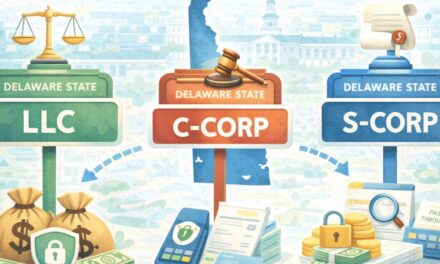
This Delaware business tax guide explains the most commonly discussed Delaware business tax advantages, including the sales tax environment, LLC flexibility, corporation formation, franchise tax, gross receipts tax, business licensing, incentives, nexus, and pass-through taxation.
The information is general and educational. Tax laws, filing requirements, and business circumstances can change. A qualified accountant, tax professional, attorney, or business advisor should review the specific facts before an owner forms an entity, changes a tax election, relocates operations, or relies on a particular tax benefit.
What Are Delaware Tax Advantages for Businesses?
Delaware tax advantages for businesses are potential financial, administrative, or structural benefits connected with forming or operating a business in the state. They may include the absence of a traditional state or local sales tax, flexible entity options, established corporate governance rules, and access to certain incentive programs.
These advantages do not apply equally to every organization. A local service provider may benefit from one part of the Delaware business tax structure while being affected by gross receipts tax.
A startup may value the corporation formation environment more than the sales tax treatment. An out-of-state owner may discover that registering in Delaware adds costs without removing obligations where the company actually operates.
The most useful approach is to consider each potential benefit in the context of the complete business model.
Why Delaware Is Often Discussed by Business Owners
Delaware is frequently associated with business formation because it offers well-established systems for creating and maintaining LLCs, corporations, partnerships, and other entities. Its corporate governance framework is familiar to many attorneys, investors, lenders, and founders.
Growth-focused businesses may appreciate the ability to design stock structures, document ownership rights, and prepare for future investment. Small businesses may be more interested in LLC formation, management flexibility, and predictable registration processes.
The state’s reputation is especially relevant to startups, holding companies, professional firms, family-owned businesses, and organizations expecting ownership changes. However, reputation alone should not determine the formation decision.
A business should compare the Delaware business tax structure with the rules in every location where it expects to employ people, own property, serve customers, store inventory, or maintain an office.
Why “Tax Advantage” Does Not Mean “No Tax”
A tax advantage is a favorable feature, not a complete exemption from taxation. Delaware businesses may still face franchise tax or annual entity tax, gross receipts tax, corporate income tax, employer-related obligations, business license fees, local permits, professional licensing costs, and federal taxes.
A company may also need to pay a registered agent, file annual reports, maintain accounting records, renew licenses, and register in other locations. Businesses formed in Delaware but operating somewhere else can be required to register as foreign entities and meet tax and reporting rules where their real activities occur.
Official state guidance confirms that Delaware has no state or local sales tax but does impose gross receipts tax on many sellers and service providers. Business licensing and other obligations may also apply. Tip:** Evaluate the total annual cost of the entity, not one attractive tax feature in isolation.
Delaware Business Tax Advantages at a Glance
The following table summarizes frequently discussed Delaware tax benefits for businesses. It is a starting point rather than a determination of what any specific company will owe.
| Tax or Business Area | Possible Delaware Advantage | What Businesses Should Review | Why It Matters |
| Sales tax | No traditional state or local sales tax | Gross receipts tax, industry fees, and obligations elsewhere | Can affect pricing and customer perception |
| Business formation | Established entity and filing environment | Entity type, ownership, governance, and filing duties | Supports long-term planning |
| Franchise tax | Predictable recurring obligation for many entities | Entity classification, calculation method, and deadlines | Affects annual operating cost |
| LLC structure | Flexible ownership and management arrangements | Federal classification, operating agreement, and owner taxes | Helps owners customize an entity |
| Corporation structure | Familiar framework for stock and investment | Corporate tax, annual reports, governance, and recordkeeping | Important for fundraising and expansion |
| Gross receipts tax | Structured by business activity | Revenue category, thresholds, filing frequency, and exclusions | May directly affect operating margins |
| Out-of-state activity | Delaware formation may support governance goals | Nexus, foreign registration, and local tax duties | Prevents incorrect assumptions |
| Incentives | Programs may be available to eligible businesses | Location, industry, investment, hiring, and approval rules | Can support qualified growth projects |
| Registered agent | Reliable point of contact for official notices | Service quality, cost, and contact procedures | Helps maintain entity compliance |
| Professional review | Clarifies business-specific obligations | Advisor qualifications and relevant experience | Reduces filing and planning errors |
How to Use the Table
Begin by identifying the rows that relate directly to the business model. A retailer should examine the sales tax and gross receipts tax rows carefully. A technology startup may place greater emphasis on corporation structure, governance, and investor expectations.
Next, separate possible benefits from confirmed benefits. The absence of traditional sales tax is a broad feature, but the effect of franchise tax, gross receipts tax, or an incentive program depends on specific facts.
Owners should also add their own categories, such as payroll, property, inventory, local permits, accounting support, insurance, and foreign registration. This produces a more realistic estimate of the total cost of doing business.
The table is most valuable when used to create questions for a professional review rather than as a self-service tax calculation.
Why Business Structure Changes the Tax Picture
Sole proprietorships, partnerships, LLCs, S corporations, and C corporations do not automatically receive the same tax treatment. The legal form of the entity can influence which returns are filed, who reports the income, what annual state obligations apply, and how owners are paid.
An LLC may be treated as a disregarded entity, partnership, or corporation for federal tax purposes, depending on ownership and elections. Official federal guidance explains that LLC classification can vary rather than following one universal tax model.
ions generally operate under a more formal structure, with stock, directors, officers, annual reports, and potentially separate entity-level taxation. Partnerships and sole proprietorships involve different ownership and filing considerations.
For a broader comparison, business owners can review this educational guide to choosing the right business structure in Delaware.
Delaware’s No State Sales Tax Advantage

The Delaware sales tax advantage is one of the state’s most recognizable business features. Delaware does not impose a traditional state or local sales tax that retailers add to the customer’s purchase price.
This can make pricing easier to communicate, particularly for local retailers and consumer-facing businesses. Customers may feel that they are paying less at checkout because a separate sales tax amount is not added to the advertised price.
Nevertheless, no state sales tax does not mean that a seller operates tax-free. Delaware generally imposes gross receipts tax on many sellers of goods and providers of services. The tax is imposed on the business rather than collected as a conventional sales tax from the customer. No Sales Tax Can Matter for Customers
Customers often compare the final amount paid rather than the listed price alone. When no traditional sales tax is added at checkout, the transaction can appear more straightforward and may be attractive for certain retail purchases.
This feature can support tourism, local shopping, and pricing discussions. It may also reduce some point-of-sale configuration tasks for businesses whose transactions occur entirely within Delaware and are not subject to another location’s collection rules.
However, online and multi-state sellers must examine where customers are located and whether their sales create obligations elsewhere. A Delaware address does not necessarily control the tax treatment of a transaction delivered to another jurisdiction.
Businesses should describe the advantage accurately. Saying “Delaware has no traditional state sales tax” is more reliable than saying “Delaware businesses do not pay tax on sales.”
Why Businesses Still Need to Review Other Taxes
A business can benefit from the lack of traditional sales tax while still being responsible for other taxes and fees. Possible obligations include gross receipts tax, corporate income tax, franchise tax, annual entity tax, employer withholding, unemployment-related contributions, business licenses, and local permits.
The financial effect also depends on whether the business can absorb gross receipts tax within its margins. Because the tax may be based on receipts rather than net profit, a high-revenue business with narrow margins should review its activity category carefully.
Payroll, property ownership, regulated products, professional services, contracting, and specialized industries may create additional requirements.
Understanding the Delaware Business Tax Structure

The Delaware business tax structure contains several separate obligations rather than one general business tax. The taxes and fees that apply depend on the entity type, revenue, industry, employment activity, physical presence, and locations where the business operates.
A company may need to consider corporate income tax, franchise tax, gross receipts tax, annual entity tax, business licensing, employer withholding, and local requirements. A business can be subject to some of these obligations without being subject to all of them.
The official business taxpayer portal provides separate information for licensing, gross receipts tax, withholding, corporate income tax, franchise tax, and other filing categories. e-Level Business Taxes and Fees
Corporate income tax generally concerns taxable income connected with qualifying corporate business activity. Whether it applies depends on the corporation’s operations, income, and relationship with Delaware.
Franchise tax is connected with maintaining certain business entities. For corporations, the amount may depend on an authorized-shares method or another permitted calculation method. LLCs and certain partnerships generally have an annual entity tax rather than the same corporation calculation.
Gross receipts tax may apply to receipts from goods sold or services provided in Delaware. Filing frequency and treatment can vary according to business activity and receipts.
State guidance explains that returns may be required monthly or quarterly, depending on the business’s filing classification. es with employees may also have withholding, unemployment, payroll reporting, and related obligations.
Local and Industry-Specific Considerations
State registration is only one compliance layer. A business may need city or county approvals, zoning clearance, building permits, health permits, professional licenses, contractor registrations, signage approval, or industry-specific authorization.
A restaurant, consulting practice, construction contractor, retail store, childcare provider, online seller, and property-based business can have substantially different requirements. Some activities involve specialized taxes, fees, bonds, or reporting duties.
Local obligations can depend on the physical address, even when the entity was formed elsewhere. Home-based businesses should also investigate zoning, lease, homeowners’ association, and insurance restrictions.
Owners should create a location-by-location compliance list rather than assuming one state registration covers every activity.
Delaware LLC Tax Benefits and Pass-Through Taxation

Delaware LLC tax benefits often center on flexibility. An LLC can provide adaptable ownership, management, voting, and profit-allocation arrangements when properly documented.
For federal tax purposes, an LLC does not have one mandatory classification. A single-member LLC may generally be treated differently from a multi-member LLC, and an eligible LLC may elect corporate treatment.
These classifications affect how income, deductions, and filing responsibilities are handled. Flexibility can be useful, but it also means that owners must understand which tax treatment actually applies.
LLC Flexibility
An LLC may be attractive to freelancers, consultants, property owners, family businesses, professional practices, small retailers, and startups that do not yet need a conventional stock structure.
The operating agreement can address management authority, voting, ownership transfers, distributions, dispute procedures, and the admission or departure of members. This flexibility can help owners create rules that reflect their commercial relationship.
LLCs may also involve fewer corporate formalities than traditional corporations. However, fewer formalities do not mean no documentation. Owners should maintain formation records, financial accounts, contracts, tax filings, licenses, and evidence that business and personal finances remain separate.
An LLC’s legal flexibility should be supported by clear accounting and governance practices.
LLC Tax Treatment Considerations
Pass-through taxation generally means that taxable business results may be reported by the owners rather than being taxed only through a separate entity-level income tax system. The details depend on ownership, elections, income type, and applicable federal and state rules.
A single-member LLC may have one filing pattern, while a multi-member LLC may generally be treated as a partnership unless another election applies. An LLC electing corporate treatment may face different returns, payroll considerations, and owner-compensation rules.
Pass-through treatment does not eliminate business filings, self-employment considerations, estimated taxes, payroll duties, franchise or annual entity tax, gross receipts tax, or obligations where the business operates.
A professional should review the entity’s intended classification before owners rely on advertised Delaware LLC tax benefits.
Delaware Corporate Tax Advantages
Delaware corporate tax advantages are often discussed in connection with governance, investment, ownership planning, and administrative familiarity. Many investors and professional advisors understand Delaware corporation documents and legal structures.
A corporation may issue different classes of stock, establish boards and officer roles, create equity plans, and continue despite changes in shareholders. These characteristics can be valuable to businesses expecting outside financing, multiple investment rounds, acquisitions, or significant ownership changes.
The formation environment can be advantageous even when the tax savings are limited or uncertain. Delaware business incorporation benefits are therefore not exclusively tax benefits.
Why Corporations Often Consider Delaware
Growth-oriented companies often evaluate Delaware because its corporate framework is familiar to investors, attorneys, and other participants in financing transactions. Standardized expectations can make governance discussions more efficient.
Corporations may be able to structure voting rights, preferred stock, board authority, shareholder approvals, and ownership transfers in ways suited to fundraising. This may be particularly relevant to startups that anticipate institutional investment.
Delaware also provides established filing systems and a large body of corporate law. These characteristics can support predictability, although they do not guarantee favorable outcomes or eliminate professional costs.
A small owner-operated company with no financing plans may place less value on these features than a startup preparing to issue equity.
Corporate Tax Responsibilities
A Delaware corporation may have corporate income tax, franchise tax, annual report, registered agent, and recordkeeping obligations.
Corporations formed in Delaware are generally required to file an annual report and pay franchise tax, subject to rules for particular classifications. e tax is not necessarily based on profit. A corporation with little revenue can still have an annual obligation because the tax relates to maintaining the corporate franchise.
Corporations operating outside Delaware may also need foreign registration, tax accounts, licenses, and annual filings in their operational locations. Payroll and sales activity can create additional duties.
Owners should compare the governance value of Delaware formation with the complete administrative and financial cost.
Delaware Franchise Tax and Gross Receipts Tax
Franchise tax and gross receipts tax are different obligations. Confusing them can lead to inaccurate budgets and missed filings.
Delaware franchise tax is generally associated with the privilege of maintaining certain entities formed or registered in the state. Gross receipts tax is connected with qualifying business receipts from particular activities.
Neither should be treated as a substitute for a complete tax review.
Why Delaware Franchise Tax Matters
Corporations formed in Delaware generally have annual report and franchise tax requirements. LLCs and certain partnership entities generally pay an annual entity tax under separate rules and do not follow the same corporate annual report process.
Official corporate filing guidance distinguishes the corporation requirements from those for alternative entities. Obligation should be included in the annual budget from the day the entity is formed. Owners should know the due date, filing method, entity classification, and consequences of late payment.
Corporations should also understand the permitted calculation methods. A company’s authorized stock structure can influence the result under certain methods, making formation documents important to the tax review.
How Gross Receipts Tax Differs From Sales Tax
Traditional sales tax is commonly charged to the customer, collected by the seller, recorded as a liability, and remitted to the appropriate authority. Delaware gross receipts tax is generally imposed on the business based on qualifying receipts.
This distinction matters for pricing and accounting. Even though the customer may not see a separate tax line, the business may need to build the cost into its prices and margins.
Gross receipts tax treatment can vary by business activity, and official guidance notes that the tax generally applies to sellers of goods and providers of services in the state. Certain rules, exclusions, thresholds, and filing classifications may apply. es should identify their correct activity category and maintain records that support reported receipts.
Delaware Business Formation Tax Benefits and Multi-State Obligations
Delaware business formation tax benefits may include structural flexibility, established filing procedures, and an entity environment familiar to professional advisors. These features can support governance and long-term planning.
However, forming an entity and operating a business are separate concepts. A company can be formed in Delaware while having employees, offices, customers, property, or management elsewhere.
The place of formation does not automatically become the only place where the company has tax or registration duties.
Formation Benefits Versus Operating Benefits
Formation benefits relate to the laws and administrative rules governing the entity. They may include ownership flexibility, corporate governance options, filing services, and continuity of the organization.
Operating benefits relate to what happens where the company conducts business. These can involve sales tax collection, gross receipts tax, income tax, payroll, business licenses, property tax, and local permits.
A company may value Delaware’s entity laws while receiving few direct Delaware operating tax benefits. Conversely, a business physically operating in Delaware may benefit from the sales tax environment but still owe gross receipts tax, license fees, and employer-related obligations.
Separating these two categories makes the formation analysis more accurate.
Why Out-of-State Businesses Need Extra Care
A company formed in Delaware but operating elsewhere may need to register as a foreign entity in its operational location. It may also need a local registered agent, business license, payroll account, tax filings, or sales tax registration there.
Employees, offices, inventory, contractors, property, management activities, and significant sales can create connections with additional jurisdictions. This connection is commonly called nexus.
Delaware provides an official nexus questionnaire to help determine whether particular activities create Delaware tax obligations, demonstrating that nexus depends on business facts rather than formation documents alone. ate businesses should map every location connected with their activities and obtain professional guidance before assuming where taxes are due.
Delaware Business Tax Benefits for Small Businesses and Startups
Delaware business tax benefits for small businesses may include no traditional state sales tax, flexible LLC options, accessible filing systems, and possible incentives. The value depends on whether the business operates locally, remotely, or across multiple locations.
Startups may consider additional factors, including investor expectations, equity structures, future fundraising, and the ability to accommodate new owners.
Neither small size nor startup status creates a universal exemption from business taxes.
Small Business Cost Planning
A small business should estimate both initial and recurring costs. Initial costs may include formation filings, professional review, business licenses, permits, accounting setup, insurance, equipment, and banking arrangements.
Recurring costs may include franchise or annual entity tax, registered agent service, license renewals, gross receipts tax, payroll administration, bookkeeping, tax preparation, and local compliance.
Owners should also consider the value of their time. A structure that creates duplicate registrations and filings may be more expensive than its direct fees suggest.
This guide to Delaware business license requirements for small businesses can help owners identify licensing questions to investigate.
Why Startups Often Evaluate Delaware
Startups planning to raise capital often consider Delaware because investors may be familiar with its corporate framework. A corporation can also provide a recognizable structure for stock, boards, officer roles, and equity compensation.
Nevertheless, the entity must still maintain accurate capitalization records, document approvals, track expenses, manage payroll, and complete annual filings. Equity activity can introduce complex tax and accounting questions for both the company and its owners.
Startups operating from another location should budget for Delaware maintenance and compliance in the operational jurisdiction.
Delaware Tax Incentives for Businesses
Delaware tax incentives for businesses may include credits or economic development programs connected with qualified investment, job creation, research, facilities, rehabilitation, or specific community objectives.
An incentive should be treated as a conditional opportunity rather than guaranteed savings. Programs usually have eligibility requirements, application procedures, documentation standards, and approval processes.
Official state information lists multiple incentive and credit categories available to potentially eligible businesses. Incentives Require Careful Review
Eligibility may depend on where the project is located, how many jobs are created, the type of property involved, the amount invested, the industry, wage levels, or the timing of an application.
Some programs require approval before costs are incurred or before a tax credit is claimed. Others may require ongoing reports, employment records, invoices, or evidence that performance commitments were met.
A program can sound relevant but still be unavailable to a particular business. Owners should never include an incentive as certain cash flow until eligibility and approval have been confirmed.
The benefit should also be compared with the administrative work, restrictions, and possible repayment or recapture conditions.
Where to Research Incentives
Businesses should begin with official information about incentives and credits. The program description, eligibility rules, application instructions, deadlines, and contact information should be reviewed directly.
Owners can then prepare a summary of the proposed project, including location, hiring plans, expected investment, industry, timeline, and financing. This information will help an advisor or program representative evaluate potential eligibility.
Businesses should retain applications, approval letters, payroll evidence, invoices, tax forms, and correspondence in an organized incentive file.
A tax professional should confirm how an approved credit interacts with the company’s returns and other obligations.
Delaware Business License, Registration, and Recordkeeping Considerations
Formation creates a legal entity, but it does not complete the operational setup. A business may still need tax registration, a state business license, local permits, professional licensing, employer accounts, insurance, banking, and accounting systems.
Requirements depend on the activity, location, employees, products, services, and industry. Official state guidance separates entity formation from licensing, gross receipts tax, withholding, and other business taxpayer responsibilities. Registration Is Not the End of Setup
After formation, owners should verify whether they need a general business license, city or county approval, zoning clearance, a professional license, an employer account, or an industry-specific permit.
They should also create a business bank account, bookkeeping process, invoice format, document-retention policy, and method for tracking filing deadlines.
An operating agreement or corporate governance documents should be completed rather than left as unfinished templates. Ownership contributions, loans, reimbursements, and distributions should be documented consistently.
Businesses formed in Delaware but operating elsewhere should repeat the review for every operational location.
Keeping Business Records Organized
Important records include formation certificates, operating agreements, bylaws, ownership ledgers, annual reports, franchise tax notices, licenses, permits, tax returns, receipts, payroll files, contracts, bank statements, and official correspondence.
Electronic copies should be backed up securely and organized by year and document type. Access should be limited when files contain confidential financial, employee, or ownership information.
Owners should also retain notes from professional consultations and document significant tax or classification decisions. Good records make it easier to prepare returns, respond to notices, support deductions, review incentives, and complete financing due diligence.
Delaware Corporations Versus Delaware LLCs
Corporations and LLCs can both provide valuable structures, but they are designed for different ownership and governance needs. The most suitable option depends on the business model, number of owners, financing strategy, expected profits, management preferences, and long-term plans.
Neither entity is automatically superior or more tax-efficient. Delaware company tax advantages must be evaluated together with federal treatment and obligations in operational locations.
When an LLC May Be Considered
An LLC may be attractive when owners want management flexibility, adaptable economic arrangements, and fewer traditional corporate formalities.
Consultants, property businesses, family ventures, professional firms, small retailers, and closely held companies often evaluate LLCs. The operating agreement can define how decisions, distributions, transfers, and disputes are handled.
Potential pass-through treatment may also be relevant, but the tax outcome depends on ownership and elections. Owners should review self-employment tax, payroll, estimated taxes, state filings, and annual entity costs.
An LLC is still expected to maintain separate finances, adequate records, active licenses, and proper contracts.
When a Corporation May Be Considered
A corporation may be considered when a business expects outside investment, multiple stock classes, equity compensation, a formal board, or future public or institutional transactions.
The corporation structure can be easier for some investors to evaluate because stock rights, director authority, and shareholder procedures are familiar. It may also provide greater continuity when ownership changes.
The tradeoff can include additional governance, annual reports, franchise tax calculations, corporate records, and potentially separate entity-level taxation.
Founders should compare investor needs with administrative costs before choosing a corporation solely because Delaware is known for corporate formation.
Common Myths About Delaware Business Tax Advantages
Delaware’s strong business reputation has produced several persistent misconceptions. These myths can lead owners to underestimate costs, miss registrations, or form an entity that does not fit their operations.
Balanced planning requires distinguishing real Delaware business tax advantages from claims that leave out important conditions.
Myth: Delaware Means No Business Taxes
Delaware does not have a traditional state or local sales tax, but that does not mean businesses pay no taxes.
Depending on the circumstances, a business may have gross receipts tax, corporate income tax, franchise or annual entity tax, employer withholding, unemployment-related obligations, license fees, and local costs. Owners may also have federal and personal tax responsibilities.
No-sales-tax status is one feature of a larger system. It should be evaluated alongside revenue, margins, payroll, property, entity type, and operating locations.
Claims that reduce the entire Delaware business tax structure to “no tax” are incomplete and potentially costly.
Myth: Delaware Is Always the Best Choice
Delaware may be a strong fit for an investor-backed corporation, a company with complex governance requirements, or a business that operates locally and values the state’s tax environment.
It may be less efficient for a small owner-operated business located entirely elsewhere. Such a company could face Delaware maintenance costs plus registration and tax obligations in its home location.
The correct choice depends on where the business operates, how it earns revenue, whether it has employees, what investors require, and how ownership may change.
Business owners should compare real obligations rather than treating Delaware’s reputation as a universal recommendation.
Common Mistakes Businesses Make With Delaware Tax Planning
Many tax and compliance problems begin with an incomplete formation analysis. Owners focus on the filing fee or one possible tax benefit but overlook recurring duties.
Common mistakes include ignoring nexus, missing franchise tax deadlines, choosing an unsuitable stock structure, skipping business licenses, mixing finances, and failing to maintain accounting records.
A practical overview of common Delaware business tax mistakes can help owners identify areas requiring additional review.
Ignoring Annual Obligations
A business remains responsible for ongoing requirements after its formation documents are accepted. These may include franchise or annual entity tax, annual reports, registered agent service, license renewals, gross receipts filings, payroll reports, and local permits.
Missing an obligation can lead to penalties, interest, loss of good standing, difficulty obtaining financing, or delays in business transactions.
Owners should assign responsibility for every filing. The person responsible may be an owner, employee, accountant, attorney, or professional service provider, but accountability should be documented.
Automated reminders are useful, although they should not replace an independently maintained compliance calendar.
Not Comparing Total Cost
The total cost includes more than formation fees. Businesses should compare:
- Initial filing and professional review costs
- Franchise or annual entity tax
- Registered agent fees
- Business licenses and permits
- Accounting and tax preparation
- Foreign registration in other locations
- Payroll and employer compliance
- Gross receipts or income taxes
- Administrative time and recordkeeping
A structure with a low initial cost can become expensive if it creates duplicate filings or professional work. Conversely, a more formal structure may be justified when it supports investment, ownership changes, or long-term growth.
Delaware Business Tax Advantages Checklist
This checklist can be used before forming, registering, relocating, or expanding a business.
| Checklist Area | What to Review | Why It Matters | Priority |
| Entity type | LLC, corporation, partnership, or sole proprietorship | Affects filings, governance, and tax treatment | High |
| Sales tax | No traditional state or local sales tax | Helpful, but not the only tax factor | Medium/High |
| Franchise tax | Corporation or annual entity obligations | Affects recurring costs and good standing | High |
| Gross receipts tax | Activity category, receipts, and filing frequency | May affect margins and operating cost | High |
| Business license | State, local, and industry renewals | Supports lawful operation | High |
| Registered agent | Appointment, service quality, and annual cost | Supports official notices and entity maintenance | High |
| Nexus | Employees, property, sales, and other-location activity | May create additional obligations | High |
| Incentives | Eligibility, timing, approval, and documentation | May support qualified projects | Medium |
| Records | Formation, tax, financial, payroll, and license files | Supports filings and professional review | High |
| Advisor review | Accountant, attorney, tax professional, or business advisor | Helps identify business-specific issues | High |
How to Use the Checklist
Review each row and record the person responsible for researching it. Add a target completion date and the official source or professional used to verify the answer.
Do not mark an item complete merely because a general article says a benefit may apply. Obtain confirmation based on the entity’s actual ownership, revenue, operations, employees, and locations.
The checklist should be reviewed whenever the business hires employees, adds an owner, opens a location, enters a new market, changes products, raises capital, or alters its tax classification.
A growing business can outgrow the assumptions used during its initial formation.
Records to Keep for Tax and Business Review
Businesses should retain formation documents, governance records, licenses, permits, tax returns, payment confirmations, franchise tax notices, financial statements, bank records, payroll reports, receipts, invoices, contracts, and incentive documentation.
Ownership records should show contributions, distributions, loans, transfers, and equity issuances. Accounting records should provide a reliable connection between transactions, financial statements, and tax filings.
Records relating to another location should be identified separately so advisors can evaluate nexus and allocation questions.
Retention periods can vary by document and legal requirement. A qualified professional can help establish an appropriate policy.
Best Practices for Understanding Delaware Business Tax Benefits
A careful evaluation begins with the real business rather than the state’s reputation. Owners should document where the business operates, who works for it, what it sells, how customers receive products or services, and where management decisions occur.
Recommended practices include:
- Start with the business model and operating locations.
- Compare entity types carefully.
- Remember that no sales tax does not mean no tax.
- Review franchise or annual entity tax.
- Identify gross receipts tax requirements.
- Verify state and local business licenses.
- Examine nexus and out-of-state activity.
- Compare total annual costs.
- Keep accurate accounting records.
- Separate business and personal finances.
- Review official sources regularly.
- Avoid relying only on social media or informal discussions.
- Revisit tax planning as the business grows.
- Confirm incentive eligibility before including it in projections.
- Seek professional guidance before making tax or formation decisions.
Creating a Tax Review Routine
A business should schedule periodic reviews of tax accounts, licenses, entity status, accounting records, payroll, registered agent information, and operational changes.
Monthly reviews may focus on bookkeeping, receipts, payroll, and upcoming deadlines. Quarterly reviews can address estimated taxes, gross receipts filings, financial performance, and activities in new locations.
An annual review should examine entity structure, ownership, annual reports, franchise tax, license renewals, insurance, professional agreements, and record retention.
The review should also ask whether the company’s operations still match its original registration information. New employees, remote workers, warehouses, customers, or service locations can change the compliance picture.
Knowing When to Ask a Professional
Professional review is particularly important when:
- Forming a new entity
- Adding or removing owners
- Hiring employees
- Opening another location
- Selling across state lines
- Raising investment capital
- Issuing equity
- Changing tax elections
- Acquiring another business
- Restructuring ownership
- Receiving a tax notice
- Applying for an incentive
- Closing or selling the company
Different professionals address different issues. Accountants and tax professionals can review reporting and tax treatment. Attorneys can evaluate legal structure, contracts, governance, and liability. Business advisors may assist with operations, projections, and resource planning.
How to Decide Whether Delaware Is Right for Your Business
The decision should be based on fit rather than popularity. Delaware may provide meaningful advantages for a business that values its entity environment, operates locally, benefits from no traditional sales tax, or expects sophisticated ownership and investment arrangements.
Another business may find that forming locally is simpler and less expensive. The analysis should include taxes, annual fees, licenses, professional costs, administrative work, growth plans, and obligations in every operational location.
Questions to Ask Before Forming in Delaware
Business owners should ask:
- What entity type fits the ownership structure?
- Where will management decisions occur?
- Where will employees and contractors work?
- Where will property and inventory be located?
- Where are customers located?
- Will the business sell products, services, or both?
- Could gross receipts tax apply?
- What franchise or annual entity tax is expected?
- Is an annual report required?
- Which licenses and permits are needed?
- Is a registered agent required?
- Will foreign registration be necessary elsewhere?
- What accounting and payroll systems are needed?
- Are any incentives realistically available?
- What will the total annual compliance cost be?
These questions should be answered with reference to actual operations rather than hypothetical tax savings.
Compare Real Fit Over Reputation
Delaware’s tax-friendly business environment and established formation systems are important advantages. They can provide value for local businesses, flexible LLCs, and corporations with complex growth plans.
However, the state’s reputation should not replace a financial and operational comparison. Owners should examine expected revenue, margins, ownership, employees, customer locations, annual fees, licenses, tax filings, and professional costs.
The most appropriate jurisdiction is the one that supports the company’s real activities and long-term goals while keeping obligations manageable.
Frequently Asked Questions
What are Delaware tax advantages for businesses?
They are potential benefits associated with Delaware’s tax and entity environment. Common examples include no traditional state or local sales tax, flexible LLC structures, an established corporation framework, and possible incentives for eligible projects.
The value of these features depends on the entity, industry, revenue, physical location, and business activity. Delaware formation does not automatically eliminate taxes or duties elsewhere.
What Delaware business tax advantages should small businesses understand?
Small businesses should understand the no-sales-tax environment, LLC flexibility, business licensing requirements, gross receipts tax, annual entity obligations, and available support or incentive programs.
They should also compare total costs. Registered agent fees, tax preparation, licenses, payroll, and foreign registration can affect whether Delaware tax advantages for small businesses create meaningful savings.
Does Delaware have sales tax for businesses?
Delaware does not impose a traditional state or local sales tax. However, many sellers and service providers may be subject to gross receipts tax based on qualifying business activity. Businesses selling into other jurisdictions may also have sales tax obligations there if their activities create sufficient connection under applicable rules.
What is Delaware franchise tax?
Delaware franchise tax is generally an annual obligation related to maintaining certain business entities. Corporations may calculate the tax under permitted methods and generally have annual report requirements.
LLCs and certain partnerships generally pay a separate annual entity tax. Owners should verify the correct obligation, due date, and filing method for their entity.
Are Delaware LLC tax benefits the same for every business?
No. LLC treatment depends on the number of members, tax elections, owner circumstances, income type, business activity, and operating locations. An LLC may be treated as a disregarded entity, partnership, or corporation for federal purposes. State and other-location obligations may still apply regardless of federal classification.
Do businesses formed in Delaware still pay taxes elsewhere?
They may. A business can have tax, registration, licensing, payroll, or reporting obligations where it has employees, offices, inventory, property, customers, or other significant activity. Delaware formation does not prevent another jurisdiction from applying its rules when the business has nexus there.
What mistakes should businesses avoid when evaluating Delaware tax benefits?
Common mistakes include focusing only on sales tax, ignoring gross receipts tax, missing franchise tax deadlines, overlooking business licenses, failing to register elsewhere, mixing personal and business finances, and relying on general online claims. Owners should compare the complete cost and confirm their conclusions with qualified professionals.
Should I talk to a professional before forming a business in Delaware?
Yes. Business formation can affect legal rights, taxes, ownership, payroll, investment, and filing obligations. An accountant, tax professional, attorney, or business advisor can evaluate the company’s particular operations and explain which Delaware business formation tax benefits and responsibilities are relevant. The professional should have experience with the entity type, industry, and locations involved.
Conclusion
Delaware tax advantages for businesses can be valuable, but they must be understood within the complete business picture. The state offers no traditional state or local sales tax, flexible entity options, an established corporate environment, and potential incentive programs for eligible businesses.
Those advantages do not create a tax-free business. Owners may still need to address Delaware franchise tax or annual entity tax, gross receipts tax, corporate income tax, business licenses, registered agent requirements, annual reports, payroll obligations, and local permits.
Businesses formed in Delaware but operating elsewhere must also review nexus, foreign registration, sales activity, employees, property, and reporting requirements in every relevant location. The tax benefits of doing business in Delaware depend on what the company actually does—not simply where its formation certificate was filed.
The strongest decision process compares entity structure, business location, customer base, revenue model, growth plans, investment needs, annual costs, and administrative responsibilities. Accurate records and periodic professional reviews become even more important as the business grows.
Delaware can offer a supportive and flexible environment for many organizations. The best results come from treating its advantages as part of a careful business analysis rather than relying on assumptions or one-size-fits-all claims.
Before forming, relocating, or changing a business structure, owners should consult qualified tax, accounting, legal, and business professionals who can evaluate their specific circumstances.